Gemba-Walk: Engage and motivate your employees

Gemba Walks, these floor tours that consist of observing and understanding the work processes directly on the ground, provide a valuable opportunity for collaboration between employees and managers.

By actively involving employees at all levels of the organization, not only do we promote better communication, But it also allows for a more precise identification of opportunities for improvement. Collaboration on the floor strengthens employee engagement, which can lead to significant improvements in productivity, quality and safety.

Tips for engaging employees

For Gemba Walks to be truly effective, it is essential that employees feel engaged and motivated to contribute. Here are some practical tips:

1. Building Trust

Before we start, it is crucial to explain the purpose of the Gemba Walks to employees. Make sure they understand that the goal is to improve processes, not to monitor or criticize them. By building trust, you foster open and honest participation.

2. Encourage feedback from experience

Ask employees to share their ideas and observations.  Ask specific questions such as “What obstacles do you encounter in your daily work?” or “What changes do you think could improve your efficiency?”. By actively listening to their feedback, you show that their opinion is valued and taken into account.

3. Train the leaders of the organization

Engage executives and managers in the Gemba Walks by training them on process observation and analysis. Their presence and active participation shows the importance of these tours and encourages employees to follow their example.

4. Recognize and reward contributions

When employees come up with ideas or solutions that lead to tangible improvements, recognize and reward their contributions. This can take the form of public acknowledgements, small bonuses or even career advancement opportunities. This recognition strengthens motivation and encourages others to actively participate.

Significant results

By encouraging employees to identify inefficiencies in their workflow, a manufacturing company can reduce cycle times by 15%. Plus Suggestions for improving safety can lead to a reduction of about 20% in accidents at work.

In another company, quality control employees who propose changes to the control equipment would lead to a reduction of production defects by approximately 10%.

The active and recurring involvement of employees during the Gemba Walks can lead to a reduction in downtime of 20% for a manufacturing plant, Thus increasing productivity and profits.

Engaging and motivating employees at the Gemba Walks is a valuable investment for any company. By actively listening, recognizing contributions and offering development opportunities, you can create a dynamic and productive work environment. Never underestimate the power of collaboration on the floor.

Ready to transform your Gemba Walks? Contact us today to learn how our solution can help your business maximize the engagement and efficiency of your teams.


Plan a demo

Back to blog articles

How to make floor tours a habit?

In manufacturing and industry, process optimization is crucial to maintain efficient and high quality production. Floor touring, or Gemba-Walk, is a powerful tool to achieve this goal.

Yet, many managers and supervisors face difficulties integrating this practice on a regular basis. Without consistent adoption, it is difficult to gather the data needed to generate effective action plans and see a tangible return on investment. So how do you turn floor touring into a habit that is rooted in your company’s culture? Here are some tips to get there.

Understand the importance of floor tours

For a habit to take root, it is essential that the entire team understands its value. Floor tours allow not only to quickly detect problems, but also to understand processes in real time and identify opportunities for continuous improvement. They also promote open communication between production teams and managers, creating a collaborative and transparent work environment.

Start with clear communication and proper training

Before starting the floor tours, it is crucial to inform and train your team. Explain the objectives of the Gemba-Walks, how they will be conducted, and the expected benefits. For example, when introducing Gemba-Walk in an auto parts manufacturing plant, supervisors took the time to show how identifying a quality problem on the production line led to a quick and efficient solution, thus improving the satisfaction of the end customer.

Integrating floor tours into the daily routine

For floor tours to become a habit, they must be an integral part of the daily routine. Start by planning specific slots for these visits. For example, you can decide that every morning, from 9am to 10am, supervisors will do their floor tour. Establishing a fixed schedule reinforces the importance of this activity and helps employees prepare mentally and physically.

Use appropriate tools to simplify the process

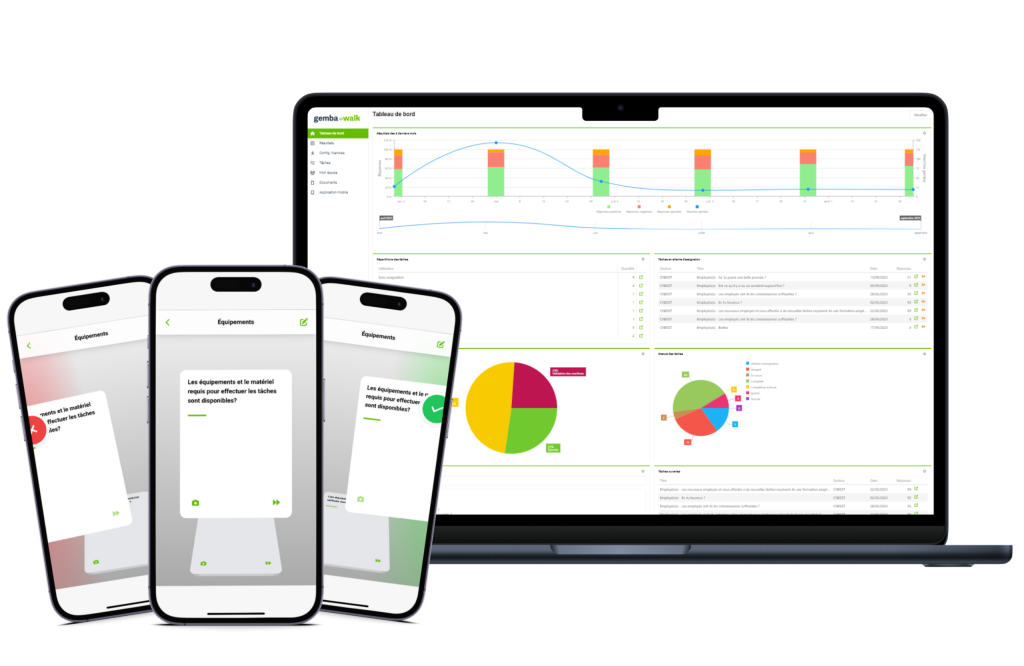
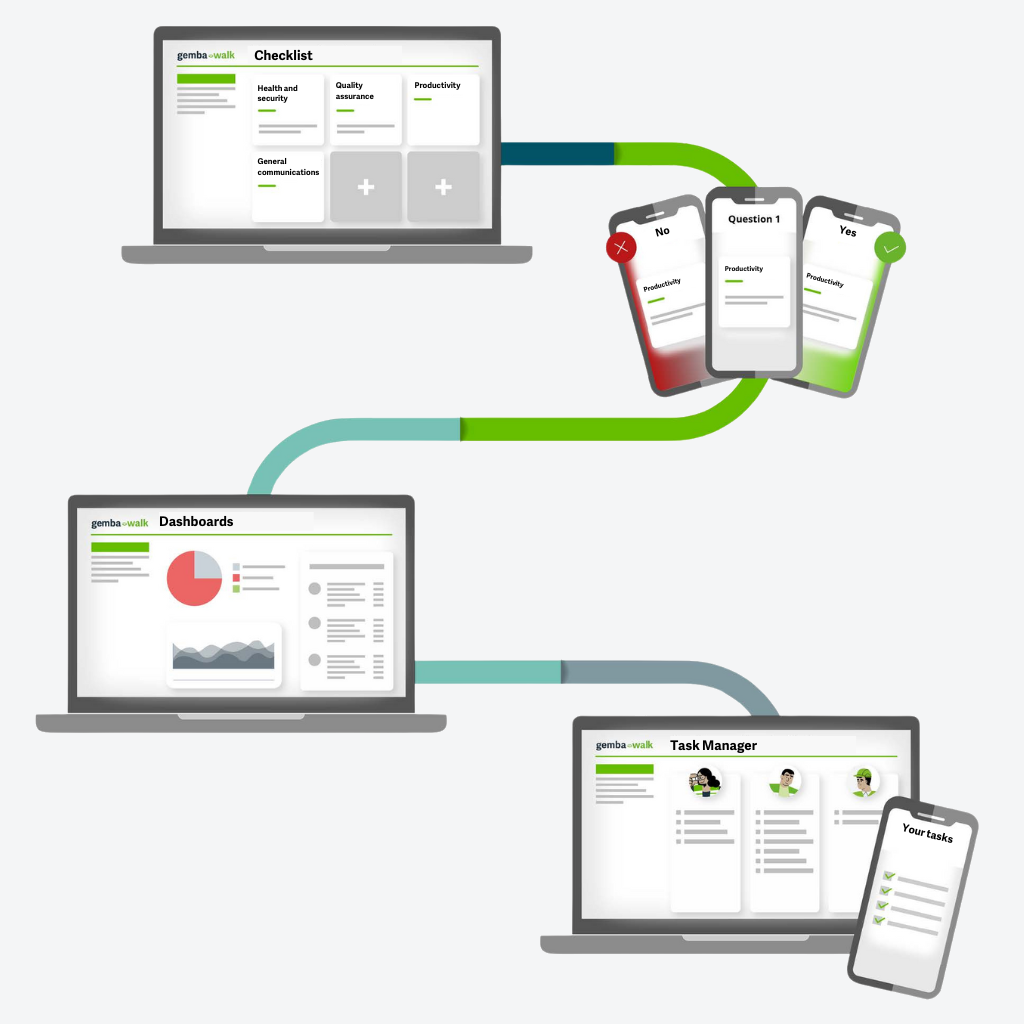
The use of dedicated software, such as Gemba-Walk, can greatly facilitate the integration of floor tours. Our application, designed to be user-friendly and customizable, allows managers to plan, track and analyze routes effectively. By automating certain administrative tasks and providing real-time reports, Gemba-Walk helps teams focus on the essentials: observation and continuous improvement.

Encourage active participation and feedback

Floor tours should be a participatory activity. Encourage your employees to get actively involved by asking questions and sharing feedback. For example, in a company producing electronic products, operators were encouraged to report small malfunctions of their machines during the Gemba-Walks, which allowed for more effective preventive maintenance. The more feedback you receive regularly, the more you can adjust and improve your processes.

Floor tours, when well integrated, can transform the way your business operates, fostering continuous improvement and open communication. By following these tips and using tools like Gemba-Walk, you can make floor touring a beneficial and lasting habit.

Ready to transform your business with regular Gemba-Walks? Discover how our software can help you simplify and optimize your floor runs. Contact us for a free demo today!


Schedule a demo

Back to the blog posts

Overcoming resistance: Integrating Gemba-Walk into a company

In an ever-changing world, companies must adapt quickly to remain competitive. Integrating a Gemba-Walk application can be a powerful way to improve business processes and foster a culture of continuous improvement.

However, this transition can sometimes encounter resistance within the team.  In this article, we explore the essential steps to successfully integrate a Gemba-Walk application into business while overcoming resistance to change.

Understand the benefits of the Gemba-Walk app

The Gemba-Walk app offers several concrete benefits for businesses of all sizes. First, it enables efficient process optimization by providing real-time visibility into field operations, making it easier to identify inefficiencies and opportunities for improvement. In addition, by reducing waste and improving quality, it directly contributes to increased operational efficiency and customer satisfaction.

For employees, the app dramatically simplifies follow-up tasks by automating tedious manual processes, freeing up time to focus on tasks with higher added value. In addition, it offers employees the unique opportunity to actively contribute to process improvement by allowing feedback and suggestions directly from the field.

Moreover, our Gemba-Walk application is distinguished by its fully customizable character and its user-friendly interface, guaranteeing a smooth integration and a minimal learning curve for users, This is a significant advantage for companies that want to maximize their return on investment.

The essential steps to integration

1. Communicate change effectively

When integrating a Gemba-Walk application into an enterprise, effective communication about change plays a crucial role in the success of the process. It is essential to involve stakeholders from the beginning and provide them with a clear understanding of the objectives and benefits of the application.

By explaining in detail how the app can improve the day-to-day lives of employees and contribute to the overall success of the company, leaders can generate stronger engagement and support from the team.

Concrete examples to share with your team:

Resolve existing issues

“With the introduction of our new Gemba-Walk application, we will be able to quickly identify and solve quality problems in our production process. This will allow us to reduce waste and improve our overall efficiency. ‘

Increase operational efficiency

“By visualizing our processes in real time, we can reduce unplanned downtime, optimize our workflows for increased productivity, and our field teams now have real-time information to make informed decisions. This will allow us to reduce delays in our operations and improve customer satisfaction.”

2. Train and prepare the team

The goal of the Gemba-Walk app is to simplify and improve your existing processes, without adding additional workloads to your schedule. By preparing your teams for training, it will facilitate the integration of the application into their daily work, allowing you to increase your operational efficiency and more effectively solve the challenges encountered.

To ensure a smooth integration of the Gemba-Walk application within your team, offer comprehensive training focused on the ease of use and essential features of the tool. Organize demonstration sessions and hands-on workshops to familiarize employees with the app and ask questions.

Did you know that…

We understand that every company has different training needs, so we offer personalized support.

Online or in-person meetings are available to provide additional support if needed. In addition, to facilitate integration, we have developed short and targeted training capsules, allowing users to train at their own pace.

For those who prefer a more structured approach, we also offer a complete support package, where we plan and implement the training process from A to Z, ensuring your team is perfectly prepared to get the most out of the Gemba-Walk app.


Schedule a meeting to learn more about coaching

3. Creating an enabling environment for change

Foster a climate of trust and openness where every employee feels comfortable expressing themselves. Encourage your employees to share their ideas, questions and even concerns about the Gemba-Walk app, so you can meet their needs and ensure an optimal user experience for all.

By working together in a spirit of collaboration and trust, we are confident that you will overcome the challenges of change and achieve your common goals successfully.

4. Manage resistance to change

Effective management of resistance to change is crucial for the successful integration of the Gemba-Walk application into business. To do this, it is essential to identify potential sources of resistance within the team and proactively address them. This may involve providing additional information about the benefits and operation of the app, as well as offering personalized support to address individual concerns.

In addition, by involving opinion leaders and enthusiastic employees, it is possible to actively promote the application and address the concerns of skeptics. By fostering a culture of mutual support, we are better equipped to overcome obstacles and foster a smooth transition to using the Gemba-Walk app in your business.


Schedule my demonstration now!

Back to blog posts.

Who Should Participate in Gemba Walks?

In today’s fast-paced business environment, organizations are constantly seeking ways to improve efficiency, streamline processes, and enhance productivity. One powerful tool that has gained immense popularity in recent years is the Gemba Walk. Originating from the Japanese philosophy of Kaizen, the Gemba Walk involves leaders and managers going to the actual workplace, known as the “Gemba,” to observe, engage, and understand the work being done firsthand. By immersing themselves in the frontline operations, decision-makers gain valuable insights, identify bottlenecks, and foster a continuous improvement culture.

However, a pertinent question arises: Who should participate in Gemba Walks? Is it limited to executives and managers, or should it involve a wider range of individuals within an organization? In this blog post, we explore the key stakeholders who can benefit from participating in these walks and why their involvement is essential for achieving sustainable and meaningful improvements.

Understanding Gemba Walks and Lean Manufacturing

Understanding Gemba walks and lean manufacturing is important for organizations looking to improve their operational efficiency and reduce waste. Gemba walks involve managers and leaders going to the front lines of their operations to observe and engage with employees, processes, and equipment. This allows them to gain firsthand knowledge of how things are actually done and identify areas for improvement.

Lean manufacturing, on the other hand, is a systematic approach to eliminating waste and optimizing business processes. It focuses on continuously improving quality, reducing lead times, and increasing customer satisfaction. By combining Gemba walks with lean manufacturing principles, organizations can identify and eliminate waste, improve productivity, and create a culture of continuous improvement. This ultimately leads to increased efficiency, cost savings, and improved overall performance.

Who Should Participate in Gemba Walks?

Senior Managers and Supervisors

Managers and supervisors typically take on the traditional role of leading improvement efforts by being physically present on the production floor. As company leaders, they conduct Gemba walks to observe how employees work and identify issues that affect productivity. During these walks, managers and supervisors ask relevant questions, listen to feedback, and gain insights into how they can improve processes. Gemba walks are essential for leaders because they allow them to see firsthand what is happening in their organization.

Leaders can identify areas where employees may need additional training or support to perform their jobs more effectively. They can also spot bottlenecks in the production process that slow down progress and find ways to eliminate them. During a Gemba walk, leaders should not only focus on identifying problems but also seek out improvement opportunities. To truly modernize this vital process and take it a step further, companies should consider digitizing their walks with the Gemba Walk App. This innovative tool allows you to easily record, track, and analyze your observations, providing real-time insights and helping you spot trends over time.

Digitize your Gemba walks

Employees

Imagine the excitement and sense of ownership your team will feel when they’re given the opportunity to contribute to continuous improvement efforts beyond their immediate job responsibilities. This is exactly what can happen with Gemba walks. While senior managers and supervisors have traditionally been the only ones involved in these walks, there’s value in involving a wider range of employees.

Having more people participate in Gemba walks means that there are more eyes on the shop floor looking for potential improvements. Employees who work directly with processes are often better equipped to identify inefficiencies or areas for improvement than those who don’t. By including them in Gemba walks, you can tap into their knowledge and experience to drive change.

Frontline Workers

As a leader conducting Gemba walks, it’s important to include frontline employees in the process. These are the individuals who are directly involved in the day-to-day operations and have a deep understanding of the processes, bottlenecks, and potential areas for improvement. Their perspectives can provide valuable information that may not be apparent to higher-level management. Additionally, involving frontline workers in the Gemba walk process can foster a sense of ownership and engagement among employees, as they feel that their voices are being heard and their contributions are valued.

Cross-Functional Teams

Involving cross-functional teams and collaborative problem-solving in Gemba Walks can greatly enhance their effectiveness and outcome. Their different perspectives and expertise can be brought together, allowing for a more comprehensive understanding of the challenges and opportunities present. This can lead to more effective problem-solving as diverse viewpoints and ideas are shared. Collaborative problem-solving further enhances this process by encouraging team members to work together, share knowledge, and collectively develop solutions. This approach fosters innovation within the organization.

Training and Development Opportunities

Gemba walks provide several training and development opportunities for employees. Some of them include:

  • On-the-Job Training: Employees can learn from seeing actual work being performed. This is an opportunity for them to understand the company’s operations and how each team contributes to overall output. It also allows them to learn how different roles, departments, and processes interact with one another.
  • Problem-Solving Skills: Gemba walks often include identifying opportunities for improvement. Employees can be involved in the process of problem identification, analysis, and solution development. This can enhance their critical thinking and problem-solving skills.
  • Process Improvement Techniques: Gemba walks are often a part of lean and six sigma methodologies. Employees can learn these process improvement techniques firsthand, including identifying waste, streamlining processes, and improving efficiency.
  • Communication Skills: During Gemba walks, employees are often encouraged to ask questions, give feedback, and engage in discussions. This can help them develop better communication and interpersonal skills.
  • Understanding of Company Vision and Strategy: Through Gemba walks, employees can see how their daily tasks align with the company’s strategy and goals. This can help them understand the bigger picture and their role within it.
  • Cross-Training: By observing different areas of the company during a Gemba walk, employees can learn about functions and roles outside of their own department. This broadens their understanding of the business and can help in future role transitions or promotions.

How to Measure the Success of Gemba Walks

Measuring the success of Gemba walks is a process-oriented task, with emphasis on improvement, problem solving, and employee engagement. Here are some methods to do it:

  • Number of Identified Issues: By tracking the number of issues, waste, and improvement opportunities identified during a Gemba walk, you can measure how effectively the process is bringing potential problems to light.
  • Resolution Rate: It’s not enough to just identify problems; you must also track how many of those problems are resolved in a timely manner. This can provide a measure of how effectively your organization responds to and addresses issues identified during Gemba walks.
  • Cycle Time Reduction: If the main goal of your Gemba walks is to streamline processes, then measuring the reduction in cycle time before and after the walk is a good measure of success. If processes are consistently becoming more efficient after the walks, it’s a sign that they’re working.
  • Employee Engagement: Gemba Walks should promote a culture of continuous improvement process. By measuring levels of employee engagement before and after walks, you can see whether or not these walks are promoting a more engaged, proactive workforce.
  • Quality Measures: If Gemba walks are being used to reduce errors or defects, then track quality metrics like Defects per Million Opportunities (DPMO), First Time Quality (FTQ), or other relevant quality indicators.
  • Financial Impact: You can also tie financial metrics such as cost savings, cost avoidance, or revenue increases that are a direct result of improvements from the Gemba walks.
  • Consistency and Frequency: Measuring how regularly Gemba walks occur and if they are occurring as planned can help ensure the walk is a consistent part of your management process, not just a one-off event.
  • Feedback: Obtaining feedback from the employees who participate in or are affected by the Gemba walks can also be a valuable measure. Their perspective may reveal if the walk was helpful, if improvements were made, or if more training is needed to fully understand and utilize the practice.
  • Safety: If the Gemba walks are also aimed at improving safety, tracking the number of safety incidents before and after the walks can show their impact.

Digitize Your Gemba Walks

Struggling to keep up with your Gemba Walks? Enhance the way you manage and organize your walks with the Gemba Walk App. Our easy-to-use application allows for easy digitization of walk cycles, tracking points, notes, and photos. You can keep track of multiple rounds of Gemba walks while preserving data over long periods of time in one convenient platform.

With our intuitive app managing Gemba walks becomes a breeze. You will never lose important information or struggle to find relevant files again! Our software eliminates errors as well as saves time and money by streamlining processes and eliminating cumbersome paper trails that can distract from real improvement plans.

Get the Gemba Walk App today!

How To Standardize Training In Your Company

Training is an essential element for any successful business. It ensures that everyone in the company is onboard with current processes, as well as introduces new ideas and methods to keep operations running smoothly. However, without proper standardization of training, companies may struggle to maintain consistency across departments and divisions. This article explains how to effectively standardize training within your company.


13 Tips To Standardize Training In Your Business

Identify Training Goals

Identifying training goals is the first step to standardizing training in your company. Training objectives should be established upfront and communicated clearly with all stakeholders, from management to employees. This process can involve process mapping of existing procedures or creation of new standardized processes for a specific set of tasks.

Standardized procedures provide structure that help ensure consistency in employee training and performance evaluations. Standardized procedure documents can include details such as sequence of tasks, roles and responsibilities, safety protocols, quality standards, and other information related to job duties and expectations. Additionally, you may want to consider creating a centralized training center where personnel can access standardized training programs or content on demand.

Evaluate Existing Training Practices

Evaluating existing training practices is an essential part of creating a successful standardization process in your company. It’s important to have the right information and resources on hand when making any decisions about how best to train employees for specific occupations.

Apprenticeship training, for instance, offers numerous benefits. Not only does it provide apprentices with hands-on experience during their training period, but companies can also benefit from having experienced workers after they complete their apprenticeships. Training offered by firms or private organizations can be more expensive than online courses, but often provides better quality instruction.

Analyze Training Needs

Analyzing training needs is a vital step in standardizing training practices within an organization. A comprehensive review of the existing training curriculum, effectiveness and types of vocational training should be conducted to assess how well they are meeting specific business objectives. Identifying any additional costs associated with further training or apprenticeship programs may also reveal opportunities for improving efficiency through automation of key processes.

Develop Standard Protocols

Developing standard protocols for standardized work training is an important part of any company’s operations. It helps streamline manual processes, increase benefits, automate business processes and improve customer satisfaction. 

Here are key steps to successfully develop standard protocols:

  • Create a process map: a process map outlines the entire process that needs to be standardized, allowing you to identify which parts can be automated or streamlined more effectively.
  • Consult industry experts: industry experts can provide valuable input on alternative procedures, best practices and automation of processes. They can also advise on how to ensure compliance with current regulations.
  • Test and refine: testing the new standard protocols helps identify potential issues before rolling out across your organization. Refining them based on feedback from employees can further optimize the entire process.

The development of standard protocols helps promote consistency in how tasks are completed by ensuring everyone follows the same steps. This ultimately improves efficiency, reduces accidents and costs and enhances customer satisfaction levels within your organization, making it a worthwhile endeavor for any company looking to increase its productivity and success rate and a very important part of standardizing the training your employees receive.

Why walk the floor of your business?

Create A Training Plan

Creating a training plan is essential for effective standardization in any company. It helps to ensure that employees are taught the necessary skills, and also allows human resources to monitor progress and performance metrics. A well-crafted training plan should include aspects of customer service, operational costs, industry standards as well as additional assessment methods if required. 

This can help create an understanding of what’s required from each individual within the organization as far as following company policy and creating a sense of company culture. When developing a comprehensive training plan, it’s important to keep in mind the desired outcomes both in the short term and long term. Short-term goals can involve meeting certain performance metrics or achieving successful completion rate goals while long-term objectives may be tied more closely with revenue growth or other financial considerations such as reducing operational costs.

Invest In Employee Training And Development

Investing in employee training and development is a key element to standardizing the training process across an organization. This ensures that customer queries are addressed swiftly, following a standard process, resulting in cost minimization for the business. By equipping customer service agents with additional skills that enable them to pursue productive tasks rather than simply responding to customer feedback or conducting skilled tasks, you can realize significant cost savings over time. 

The long-term benefits of investing in employee training far outweigh any initial costs incurred (e.g., hiring experts, purchasing software, etc.). Investing in your company’s workforce is essential if you want to maximize cost savings while ensuring consistent standards are being met when it comes to customer support services.

Utilize Technology To Automate And Streamline Processes

Utilizing technology to automate and streamline processes is an effective way to standardize training in your company. With the right digital solutions and business apps, you can meet customer demand while ensuring employees have the skills they need for optimal job performance.

Here are some of the ways that businesses can incorporate automation into their training efforts:

  • Skill gaps: identify areas where employees may be lacking in knowledge or understanding and make sure those skill bundles are included in future training sessions.
  • Digital transactions: use automated systems to quickly process payments and other customer requests so that customer service reps don’t have to waste time manually processing them.
  • Job performance: monitor employee progress over time with automated tools so that managers can easily identify areas where improvement is needed and provide additional support.
  • Standardization: utilize a standardized approach across all departments by using technology-enabled workflows, which ensure consistency in quality control and productivity.

By implementing these strategies, companies can create efficient workflow processes that help reduce costs while still maintaining high standards of excellence when it comes to the customer experience. Automation also eliminates common human errors that could lead to costly mistakes down the line, resulting in improved efficiency and better overall results.

Monitor And Evaluate Training Progress

One of the most important steps in standardizing training in any company is to monitor and evaluate progress. This means understanding how employees are progressing through their training, as well as what additional methods may be needed for more advanced or specialized tasks. By keeping track of progression, companies can ensure that they’re meeting necessary standards when it comes to ground operations.

Monitoring training can take many forms; from tracking employee attendance at workshops and courses, to measuring performance on tests or evaluations. It’s also possible to use technology-enabled tools such as automated surveys to quickly capture feedback and see where improvements should be made. Companies should also consider investing resources into developing a system for managing repetitive tasks associated with training. This will help streamline processes and improve efficiency over time.

Tips to continuously improve your business

Implement Quality Assurance Programs

Standardization of training in a company is essential to ensuring consistent quality and it can be achieved through the implementation of quality assurance programs. Quality assurance programs are designed to assess current processes, identify potential areas for improvement, and ensure that all industry players adhere to established standards. 

Maintain Documentation Of Training Efforts

Maintaining documentation of training efforts is a critical aspect of standardizing the training process in any company. Doing so not only helps ensure that all areas are being adequately covered, but also keeps track of progress and ensures consistency across departments. It’s important to document each step of the training process, from initial research and development to final implementation.

Creating detailed records can help with assessing overall effectiveness, while also providing an understanding of how employees have responded to different elements of the program. Noting feedback, employee performance changes, and other data points can be invaluable for evaluating current methods and making improvements where needed. 

Additionally, having comprehensive records on hand makes it easier to duplicate successful processes in other areas or even at other sites within the organization. Overall, keeping clear and organized files will benefit both trainers and trainees alike by allowing them to look back on past successes as well as learn from mistakes more quickly. Companies should strive to create an efficient system for documenting their training efforts if they hope to maximize their potential for success in this area.

Perform Gemba Walks

Performing Gemba Walks is an effective way to standardize training within a company. Gemba Walks involve walking through the workplace and observing how processes are being carried out in order to identify areas for improvement. This can provide insights into what works well and what could be improved upon, allowing managers to better understand how their staff are performing their tasks and the level of knowledge they possess about the task or process at hand.

By performing regular Gemba Walks, companies can ensure that employees are following standard operating procedures (SOPs), which helps improve productivity, reduce mistakes, and increase customer satisfaction. It also allows managers to monitor any changes in employee performance over time so they can quickly address any issues before they become major problems.

Gemba Walks are an important tool for ensuring effective training across all levels of a business, from entry-level employees up to senior management, as they help organizations keep track of progress towards goals, identify where additional training may be needed, and measure the effectiveness of existing practices. By implementing these kinds of walkthroughs regularly, businesses can rest assured that their teams have received appropriate training and remain knowledgeable about current practices in their industry.

How to implement continuous improvement in your business

Take Advantage Of Online Learning Platforms

Taking advantage of online learning platforms is an effective way to standardize training in your company. This approach offers a broad range of opportunities for employees to learn new skills, whether they’re just starting out or looking to brush up on their existing knowledge. It also ensures that everyone has access to the same information and resources regardless of physical location or time constraints.

Online learning platforms allow businesses to create customized courses tailored specifically for their needs. Companies can upload instructional materials, such as videos and PDFs, into the system which are then accessible from any device with an Internet connection. With this type of platform, individuals can track progress and receive feedback quickly after completing each lesson or module. Additionally, many online learning tools offer assessments before and after lessons so employers can gauge how much their team has learned.

Incorporate Continuous Improvement Strategies

Continuous improvement strategies should be incorporated into any training program for a company to ensure the most efficient and effective use of resources. When implemented correctly, these strategies can help streamline operations, optimize processes, and improve overall performance.

For example, managers can take steps to analyze current protocols and identify areas in need of improvement. This process should involve gathering feedback from employees on their experiences with existing training materials so that changes can be made to address issues they may have identified. Additionally, introducing new technology or incorporating virtual reality simulations into the training sessions could enhance the learning experience while making it more accessible for remote workers.

Once improvements are made, it’s important to continually monitor how well the new methods are working and make adjustments as needed. Doing this allows companies to stay up-to-date with advances in technology and industry trends, ensuring their workforce is prepared for whatever challenges arise in the future. By taking a proactive approach to training through continuous improvement strategies, businesses can remain competitive in an ever-evolving environment.


The Best App To Improve Your Business

Are you looking for a bulletproof method of improving your existing training processes? The Gemba Walk App combines the power of technology and data-driven decision making to help you achieve your goals. With this app, you can easily monitor performance metrics, identify areas for improvement and take corrective action when needed. We also provide ongoing support and guidance to ensure maximum success!

Contact us 

How to Get Buy In From Employees

Have you ever had a problem getting buy-in from your team? It can be one of the most difficult tasks for any leader. After all, if you don’t have people on board with your vision and goals, it’s impossible to make real progress. But how do you get employees to believe in what you want them to?

In this article, we explore the strategies necessary to get the buy-in of employees. We look at how to create effective messaging that resonates with staff members as well as ways to build trust and foster an environment of collaboration. By following these steps, leaders can expect better engagement from their teams, resulting in greater efficiency, productivity, and long-term growth for everyone involved!


Identify Your Goals

When it comes to getting employee buy-in, identifying your company goals is key. When employees understand the overall mission and direction of the organization, their job satisfaction increases and so does their engagement.

Consider conducting an anonymous employee survey to allow people to provide feedback without fear of judgment or retribution. This will provide data-driven insights into whether changes need to be made within your organization. With open communication channels between management and staff, organizations can gain valuable information about what motivates their workforce and capitalize on areas where improvements need to be made.


Understand What Motivates Employees

Understanding what motivates employees is a critical part of getting buy-in from them. Business leaders need to recognize that successful companies keep workers motivated, as it leads to benefits such as improved employee retention. Managers should design an effective game plan based on individual contributions and an understanding of employee engagement scores.

When it comes to motivating staff, there are several things businesses can do:

  • Provide incentives: It’s important to reward employees for their hard work with tangible rewards like bonuses or promotions. This will give them a sense of accomplishment and make them more likely to stay with the company.
  • Invest in training opportunities: Access to additional learning resources encourages employees to develop new skills, increase productivity, and improve job satisfaction. Offering educational assistance programs such as tuition reimbursement can also boost morale and show employees that you value their efforts.
  • Recognize accomplishments: You can acknowledge individual successes by giving recognition awards or certificates of appreciation. These gestures can go a long way towards increasing motivation and loyalty among staff members. Celebrating team wins demonstrates that everyone’s contribution matters and helps foster a sense of unity within the organization.

By taking the necessary steps to understand what motivates your workforce, you’ll create an engaged environment where everyone feels valued.

Getting the most out of your retail floor team


Set Clear Expectations

Businesses need to ensure that there are measurable goals defined for each employee, as it will help them understand their role and the value of their contributions. Goal setting helps make sure everyone knows what they should be doing and why it’s important. Delineating and reaching achievable milestones can create a ladder up toward management and enhance performance.


Create A Positive Work Environment

Providing an engaging and holistic employee experience that goes beyond just financial security is essential for getting buy-in from employees Harvard Business School has conducted research showing how, in real workplace environments, team involvement can dramatically improve the entire process of getting buy-in from staff members (source).

While strong leadership is key, developing meeting structures that allow for communication between management and those on the ground floor is crucial. It’s beneficial to take into account feedback from all levels of employees so everyone feels valued and included in the decisions being made. Likewise, providing company shares can help create alignments with the goals of the organization.


Foster Open Communication

Unhappy employees or a lack of variance in employee engagement makes it difficult to get people excited about a project. The key to creating a positive work environment lies in encouraging dialogue between staff members. There are several ways employers can foster openness within their organization. 

For instance, investing in project management software allows team members to communicate easily, eliminates doubts around expectations and roles, and helps increase efficiency and transparency. Employers should create an atmosphere where everyone feels comfortable voicing their opinions without fear of judgment. If they want enhanced collaboration and understanding, organizations must make sure all participants feel safe enough to speak openly.


Offer Rewards And Recognition

Providing rewards and recognition is one of the best ways to get buy-in from your team. A simple thank you note can go a long way in showing your staff that they matter and that you appreciate their hard work. Similarly, publicly recognizing someone’s success is another great way of making employees feel valued. It’s also important not to reward people for the wrong reasons or without considering the level of effort involved.

Here are some things you should consider when rewarding your staff:

  • Keep up with what other businesses are doing: It pays (literally) to stay on top of business news and knowing what incentives other companies offer so that you can remain competitive in terms of employee satisfaction.
  • Offer flexible working options: Flexible working schedules, job-sharing arrangements, and telecommuting opportunities give people more freedom about when and where they work, making them feel more valued by the company.
  • Provide monetary benefits: Rewards such as bonuses based on performance can provide extra motivation for good results. Remember that these may come with additional security controls around payment processing and taxation liabilities.
  • Make use of technology: Management software provides dozens of ways to incentivize employees. Technology can be used to increase efficiency, leading to the continuous improvement of employee output and morale.

5 tips to continuously improve your business


Embrace Transparency

By embracing transparency, organizations create a more collaborative environment where people are free to share knowledge, skills, and resources freely with each other. Leaders need to make sure that everyone has access to important data and documents (not just those at the top of the organization).

Information should flow in two ways. Employees must feel comfortable providing feedback and expressing ideas without fear of negative repercussions. Meanwhile, leaders should ask for input from all levels of the organization by engaging in open dialogue with both individual team members as well as larger groups through regular meetings or surveys.


Make Decisions With Employee Input

By allowing employees to have an active role in the decision-making processes, employers can leverage their team’s collective knowledge and experience for the benefit of the company. When they are involved in decision-making processes, employees understand why certain actions are taken. This increases their engagement with tasks and projects.

Making decisions with employee input is a great way to get buy-in from employees. It shows that their opinion matters and it helps them feel more connected to the organization they’re part of. Not only does this help build trust between employers and employees, but it also encourages collaboration within teams.


Make Time For Social Interaction

It’s important to create an environment where everyone feels comfortable expressing themselves. This can be done by encouraging staff to take regular breaks from work, have lunch together, or organize team-building activities.

Making sure that employees feel included and appreciated goes a long way toward fostering positive relationships between managers and their teams. When you involve your team members in conversations about the company’s goals and objectives, they are more likely to become invested in achieving them. Plus, when people get along well with each other in the workplace, they are better able to collaborate on projects and tasks.


Invite Feedback

Inviting feedback from employees is a great way to get them on board with any project or initiative. By hearing different perspectives, you’re more likely to come up with creative solutions. This can be especially important when launching something new within the company.

Gathering feedback doesn’t have to be a lengthy process. Try setting aside time at least once a week for people to give their input in small group settings. It could take the form of check-ins during meetings, quick surveys over email, or even informal conversations around the water cooler. There are lots of ways to gather ideas without taking too much time away from other tasks.

When asking for feedback, be sure to create an open atmosphere where all opinions are valued equally. Make sure everyone has a chance to contribute without feeling like their ideas won’t matter or go unheard. If you set this tone early on, you’ll find that getting employee buy-in is much easier down the line because they know that their opinion counts!


Take Responsibility For Mistakes

Taking responsibility for mistakes helps build trust, something essential in the workplace. Showing that you recognize your errors and are willing to take ownership of them not only demonstrates integrity but also sets an example of accountability – two qualities that go a long way toward inspiring employee confidence.

Acknowledging fault shows respect. Demonstrating this kind of understanding creates an environment where people are more open to working together on solutions. Likewise, accepting responsibility means showing that everyone makes mistakes (including leaders) but learning from those missteps is what counts most.


Lead By Example

Leading by example is an essential tool for gaining buy-in from employees. When leaders demonstrate their commitment to the organization and its goals, it can inspire others to follow in their footsteps.

Here’s how it works:

  • Make sure your words match your actions: If you tell your team members they should be punctual and take breaks when necessary, make sure you are living up to those expectations as well. That way, everyone will understand that these standards apply equally to everyone. A leader who practices what they preach shows respect for the people around them.
  • Take initiative on projects and tasks: This includes those outside of your job description. Offering to help out with grunt work or jumping into difficult conversations demonstrates a willingness to get involved wherever needed and sets an expectation that hard work is honored and appreciated within the company culture.
  • Be flexible when things don’t go according to plan: Employees need to know that mistakes won’t lead to punishment or reprimand. Rather, they can serve as learning experiences if handled correctly. Acknowledging errors openly while showing understanding helps create an atmosphere where failure isn’t feared but seen as an opportunity for growth.


Perform Gemba Walks

Gemba walks allow leaders to observe processes at the actual location where they take place, enabling them to gain a deeper understanding of how they could be improved. This gives team members a chance to interact with their leader in an informal setting, which can help build trust while sharing feedback on any potential improvements.

Gemba walks are beneficial for both managers and employees alike. Managers benefit by getting firsthand insight into workplace conditions and employee performance. On the other hand, employees can explain their work process directly to their manager and provide suggestions for improvement without fear of retribution or punishment.

Performing Gemba walks is an excellent strategy for gaining buy-in from employees because it facilitates open communication between managers and staff and allows everyone to contribute ideas for improvement in a safe environment. The best way to introduce routine Gemba walks into your operations is by investing in an intuitive software solution.

The Gemba Walk App is designed to improve efficiency in the workplace. It helps remove barriers between leaders and employees while also amping up employee engagement level. This project management software solution can be used to document all kinds of information acquired during a Gemba walk, including employee feedback. Likewise, users can make annotations and accompany them with photos, create custom checklists, and much more.

Why walk the floor of your business?

9 ways to work better as a team with Gemba walk

Workplace management is a highly observational task. You need to make sure that everything is taken into account to find opportunities for improvement, and to make sure that your entire team is on the same page. The Gemba walk process is all about realizing these organizational goals by adopting a lean management philosophy to minimize wasteful activities and establish successful collaboration. In this article, we explain how you can work better as a team with Gemba Walk!

What is Gemba Walk?

At Toyota they use the word Gemba to refer to “the place where things happen”. In operational terms, Gemba refers to the environment (plant, store, web) where the value of products, solutions or services is created and delivered.

This is not limited to the production plant or the physical store, it extends to all activities and human networks that create and add value to the product (production, distribution, logistics, communication and sales). 

Gemba is a work philosophy within companies. It’s a model that guides all the teams in the organization in their way of doing things and that can be used to detect problems and find areas of improvement. As for Gemba walks, they consist of gathering information by walking around, observing and interacting with employees. 

Gemba walks allow businesses to optimize their operations by:

  • Removing barriers between leadership and workers
  • Increasing business process efficiency and productivity
  • Saving time and reducing wasteful activities
  • Accelerating data collection time
  • Helping thoroughly document issues
  • Producing fast assessment and problem-solving

How to do a Gemba walk? | Steps and Tools Needed

9 tips to work better as a team with Gemba walk

Here are key tips to work better as a team with Gemba walk:

  1. Ensure that your team is prepared
  2. Define a road map
  3. Involve everyone
  4. Don’t penalize workers
  5. Keep record
  6. Mix up the timing
  7. Ask about everything
  8. Save suggestions for later
  9. Reflect

1. Ensure that your team is prepared

One of the most important steps for a successful Gemba walk is to make sure that all of your employees and team members are prepared for the walk. This means that they should know the purpose of the Gemba walk process and understand how it can remove obstacles in their workflow. This helps make the activity less of an interrogation and more of an opportunity for effective collaboration.

Some workers may assume that this improvement process serves only to criticize the employees, and to attribute blame to them. This assumption could not be further from the truth, but it’s understandable since the lean management philosophy is rather recent, and traditional business practices often create a “us and them” dynamic. By effectively briefing your team on the Gemba walk process, and how it is meant to improve their life at work, they will be more willing to collaborate.

2. Have a defined road map

Once your team is on the same page, and they know what will happen during the walk, the next step is to define a roadmap to execute your Gemba walk checklists. The Gemba walk process is not your average management by walking. The walk is used to target different KPIs rather than generalized problems. 

For example, if the observer is gathering information about workplace diversity, then he will have a prescribed set of questions to ask employees during the walk. If it’s a safety Gemba walk, the checklist will be limited to your industry’s health and safety regulations.

How long should a Gemba walk take?

3. Involve everyone

The most misunderstood part of the Gemba walk is when people assume that the work is solely executed by the observer. However, that is not the case. Everyone in your team should play their role in the improvement process, rather than just some key employees.

To initiate effective teamwork using the Gemba walk, make sure to collect input from all the workers and bystanders that are involved in the company. Of course, it depends on the purpose of your inquiry, but employees should feel comfortable to communicate wasteful activities or relevant information. Enhancing communication leads to high-performing teams.

4. Don’t penalize the workers

The goal of the Gemba walk is to ensure fluid and optimized work processes to achieve organizational goals. This can only take place if a work environment welcomes its employees to genuinely and effectively collaborate during the Gemba walk process. If speaking the truth is reprimanded and prevents career development, you won’t be able to implement a culture of continuous improvement within your organization. 

5. Keep a record

To make sure that your Gemba walk process is effective, keep a record of everything that employees share. Effective collaboration should not fall on deaf ears, and their input should be recorded to find opportunities for improvement. If employees continually make a recommendation but never see action, the whole process won’t be seen as an opportunity for successful collaboration anymore, but as an administrative rubber stamp.

6. Mix up the timings

For an accurate depiction of the work process, make sure to mix up the timings of your visit on the floor. For instance, if you coordinate your Gemba walk process around lunchtime you might notice that certain employees don’t respect the lunch schedule assigned to them. Once again, rather than reprimanding right away for doing so, ask why. You may learn that since a specific person is on break, others can’t do their job since they depend on them!

7. Ask about everything

Do not assume that a task is done to its general standard at all times and by all employees. By asking about everything and not believing in any preconceived notions, you will find opportunities for improvement. When workers deviate from the content on your Gemba walk checklists, it’s important to stay tuned because you may discover pertinent information.

8. Save the suggestions for later

During the Gemba walk, focus on the process instead of giving suggestions to workers right away. This will ensure that you don’t get sidetracked and that you conduct an effective Gemba walk. It is very humane to jump to conclusions and make improvements there and then, but the changes that you need to apply should only be made after you reflect upon your decisions and ask for suggestions from employees.

How to improve your business with Gemba walk

9. Reflect

Once you’ve made your tour and spoken to the entire team concerned by your specific inquiry, it’s critical that you take the time to review the exchange you’ve shared for it to be considered an effective collaboration. By grouping recurring themes or focusing on an outlier suggestion, you will find gems to perfect work processes.

You should not only digest the information that was collected during your Gemba walk, but also ask yourself some questions. What other questions could I ask next time? Did I cut an employee off when they were talking? Did I approach them at a bad time during production? As you can see, Gemba walk is all about continuous improvement, both for your business processes and your leadership team.


Digitize your Gemba Walk 

How to encourage sustainability using Gemba Walk?

In high-performance organizations, leaders need to be present where people (collaborators and teams) create value for other people (customers). That place, which is situated in different places in the organizational value network, is what is called Gemba.


Lean Manufacturing, as the philosophy that defines the thinking, action and learning model of high-performance organizations, defines four fundamental and inseparable concepts:

  • Gemba: the place where value is created for clients.
  • Build-Measure-Learn: a cycle of experimentation and continuous learning.
  • Kaizen (continuous improvement), Kaikaku (revolutionary innovation) and Kakushin (disruptive innovation).
  • Muda: an activity that does not add value to customers.

What is Gemba Walk?

Gemba walk is a simple but powerful method performed by managers and leaders to promote continuous optimization of processes in their businesses. During this process, managers physically go to places where employees are generating value to document issues, find areas of improvement as well as possible solutions.

It is a walk to observe and ask employees about their tasks in order to identify some problems and increase profits and productivity. The word comes from the Japanese word “Gemba” or “Gembutsu” which means “the real place” or “the place where things happen” and refers to the act of seeing what is really going on in your business.

The concept was developed by the Toyota executive, Taiichi Ohno, who thought that, to reduce the problems and bottlenecks of the operations, it was necessary to learn from all those involved in order to achieve the ability to implement consistently and efficiently the necessary changes in a company.

What Gemba Walk is not

It is very important that Gemba Walk is not confused with a performance review method. You need to make sure that your team members feel comfortable enough to collaborate with the process to get the best results possible.

Keep in mind that collaborators are the ones that are working in the field, so making sure that they are involved with the Gemba Walk process is key for the plan to succeed. Below we list some questions you could include in your questionnaire for the Gemba Walk. They are quite general, but you can adapt them to the needs of your organization.

Gemba Walk common questions

  • Is there an established, documented, and standard process for accomplishing this task or activity?
  • Has the 5S been implemented in this area? If so, is the standard for how the area should be kept clear? Is it visual?
  • How well do those doing the work understand the standard?
  • Is it visual? Is it documented?
  • Are standard procedures being followed?
  • Is the process being performed according to the standard?
  • If the process is not being followed according to the standard, why do you think that is?
  • If the process is not working to standard, are guides available for troubleshooting or quick repair procedures? Do employees use them?
  • If the process exceeds the standard, why do you think it is?
  • What are the current issues in this process area?
  • What can we do to improve current conditions?
  • How can you make abnormal conditions more visible immediately?

In essence, when taking Gemba tours, you are trying to know the following:

  • What is the current problem?
  • What causes the problem?
  • What should be done to solve the problem?
  • How will you know that the problem has been eliminated?

How is Gemba Walk relevant to sustainable businesses?

If you are looking to make your organization more sustainable in a 360º view, Gemba Walk is probably the best way to start this journey. During the process you will be able to identify which are your weakest points, and learn from them while you open your ears to your collaborators. This process will be key to design sustainability initiatives within your company.

The dynamic of this method will help you improve the relationship with your collaborators while making them part of the diagnosis and protagonists of the change to reach a sustainable business model.

After a Gemba Walk analysis, you will understand which are the weakest points in your processes which will help you rethink them. Analyzing your business processes using the Gemba Walk method will help you reach sustainability in different aspects like processes, environmental care, team engagement, relations with partners and other stakeholders.

Tips to perform a successful Gemba Walk

Gemba Walk is one of the 5 Lean Guiding Principles that entrepreneurs and businessmen should practice on a regular basis. The effectiveness of Gemba Walks is greater since the processes are more stable and there is a good visual management that makes inefficient conditions visible.

Here are the steps you need to take to make sure your next Gemba walk is successful:

Prepare the team

It is important that the team members who will participate in this experience have a good understanding of what a Gemba Walk is and how it will positively affect the organization. Talking about the walk before starting it will help everyone feel more comfortable with the process.

Make a plan

Gemba walks are not to be confused with Management by Walking Around (MBWA), a different approach in which leaders simply wander around and get involved in what employees are doing. A Gemba walk must have a defined objective, associated with a specific concern and related to a KPI. Thinking about remote workers? No worries, you can also perform a Virtual Gemba Walk using tools available for that purpose.

Digitize your Gemba Walk

Ask relevant questions

Asking relevant and meaningful questions during a Gemba walk leads to an interactive session with employees that helps build a positive relationship between managers and employees.

During a Gemba walk, managers should ask various questions about the process such as Who is involved? What materials are used? What do you do daily? How do you know what to do? When is the task done? Make sure you include these questions in your Gemba Walk Checklist. You can also use a Gemba App to customize your checklists and reap different benefits!

Focus on the Gemba Walk process

A Gemba walk process is not an employee evaluation. The purpose is to observe, understand, and improve processes. It may be helpful to prepare employees by letting them know what they will be asked. There are no correct answers, what you need are honest and complete answers.

Take notes

Because a lot happens during a Gemba walk and you will want to remember it all later, it is important to carry tools to record your observations. By writing down your observations and taking photographs, you are more likely to become more involved and focus on observation and reflection. Using an app like Gemba App will help you take notes and pictures on the go.

Make questions

One of the hardest things to do on a Gemba walk is let go of the assumptions. Don’t assume that everything is being done to the standard. It is best to ask employees why they do things the way they do. These 5 questions are great for getting the information you need:

  • What: What are the inputs and outputs of the process?
  • Who: Who are the people involved in the processes? Who provides information for the processes? Who are the “customers” of the process?
  • Where: Where is the work done? Are all the necessary materials and equipment available in the workplace?
  • When: Are all process inputs and information available when needed? Are waiting times long or short?
  • Why: What value does this process bring to the customer?

Try to learn

Managers and leaders must show proper attitude when doing Gemba walks. Remember that it is about evaluating the process and not the worker, therefore, you should avoid giving suggestions and be very attentive to all actions to learn new things from the workers. However, you can provide positive feedback on a job well done.

Don’t suggest changes during the process

A Gemba hike is a great opportunity for observation, not action. It can be very tempting to propose changes, new solutions, or make improvements on the fly, but changes should only be made after a period of analysis.

Involve people from different areas

It may be a good idea to invite a colleague from other departments and team members with very different daily tasks. People who are less familiar with the processes will bring a new point of view and ask different questions that others may not have asked. These different sets of questions will allow you to analyze the processes from different angles.

Follow-up with the employees involved

Sometimes the results of a Gemba walk will be immediately obvious, but even if there is no immediate action as a result of a particular walk, it is important to follow up with employees to share insights and communicate what the next steps are.

Post-Gemba day

Before taking any action based on the observations of the Gemba walk, you should organize your thoughts and correctly analyze the situation. You can even invite some of the workers you’ve been working with.

If you have a meeting after each Gemba walk, it should include some participants from different departments, to have as many points of view as possible and thus have the ability to make the best decisions; a decision that really improves the business processes of your company. It is essential to tour the factory or sales center and gather detailed information on what needs to be improved.

Overview

Gemba Walk is an excellent way to bring your business closer to sustainability. Current times demand that companies adapt the way they are working. If you are thinking about implementing Gemba Walk in your organization, you should check out the Gemba Walk App, which will help you define, execute, analyze and take further actions, in a very simple and complete way.

Schedule a demo