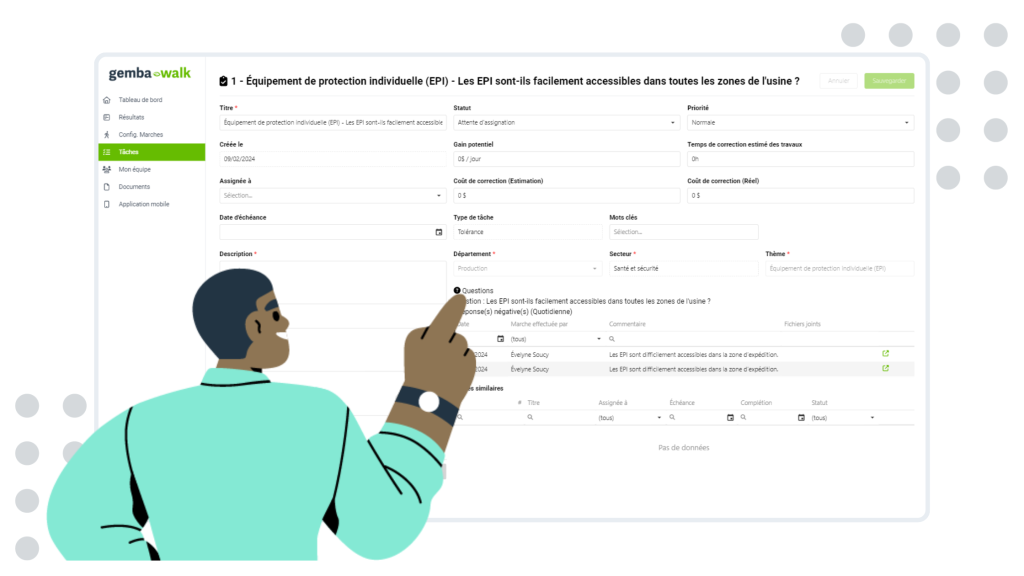
Why digitize and document your floor tours?

In today’s industrial world, efficiency and precision are crucial. Floor tours, or Gemba-Walk, are essential to identify opportunities for improvement. However, traditional methods of collecting and documenting information can be tedious and prone to human error, resulting in delays, inconsistencies and loss of valuable data. These drawbacks can compromise your company’s ability to respond quickly to problems and maintain high standards.

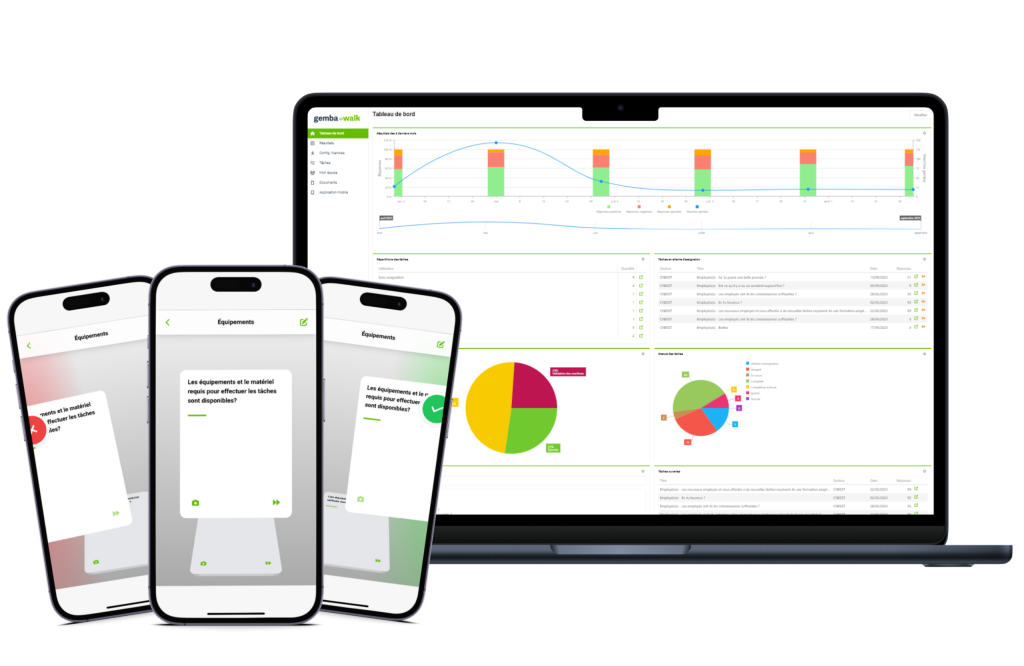
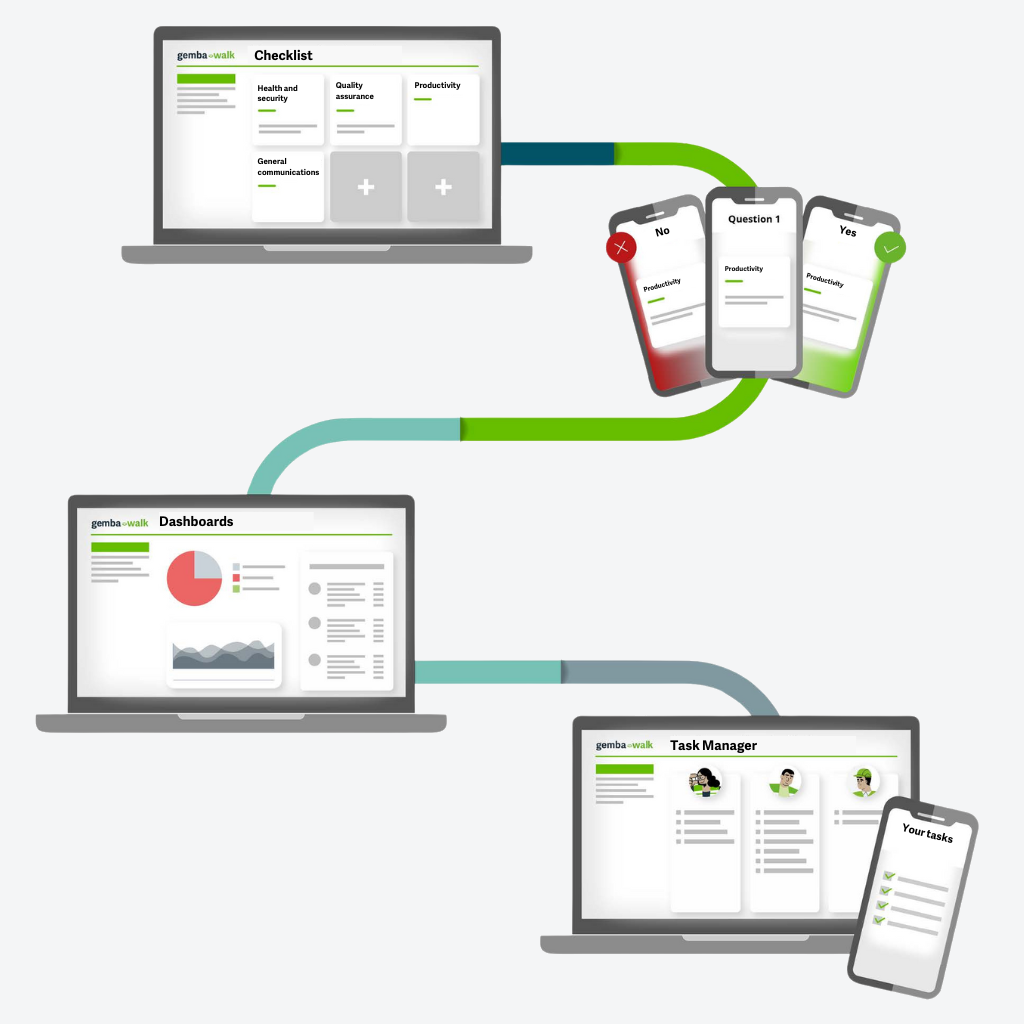
Digitization offers a revolutionary solution by transforming the way data is collected, analyzed and used. By moving from a paper-based system to a digital platform, companies can not only streamline their processes but also maximize the impact of their floor tours. This transformation brings many benefits, ranging from improving health and safety to increasing productivity, Eliminating manual inefficiencies and errors.

Simplicity and ease of use

Digital solutions are designed to be intuitive and easy to use. With user-friendly interfaces, even employees with little technical skills can quickly adapt. This reduces training costs and improves user acceptance.

Customization and flexibility

Digital tools for floor tours are highly customizable. You can tailor the inspections to your specific business needs. Whether for daily, weekly or monthly inspections, the flexibility of these tools allows you to create custom floor tours that perfectly meet your requirements.

Strengthening Communication and Collaboration

Digital floor tours promote better communication and collaboration between teams. The data collected in real time can be shared instantly with all relevant members, allowing faster and more informed decision-making. Digital tools also facilitate discussions and feedback, creating a culture of transparency and continuous improvement.

Health and Safety Improvement

The health and safety of your employees is paramount. By scanning your floor tours, you can easily identify and document potential risks. This allows for real-time tracking of corrective actions, ensuring a rapid response to security issues. Digital reporting also facilitates compliance with safety standards, reducing the risk of accidents and injuries.

Increased productivity

Automation of floor tours reduces the time spent collecting and processing data. Information is centralized and easily accessible, allowing managers to focus on analyzing data and implementing improvements. This approach not only saves time, but also minimizes human errors, increasing the overall efficiency of your operations.

Quality assurance

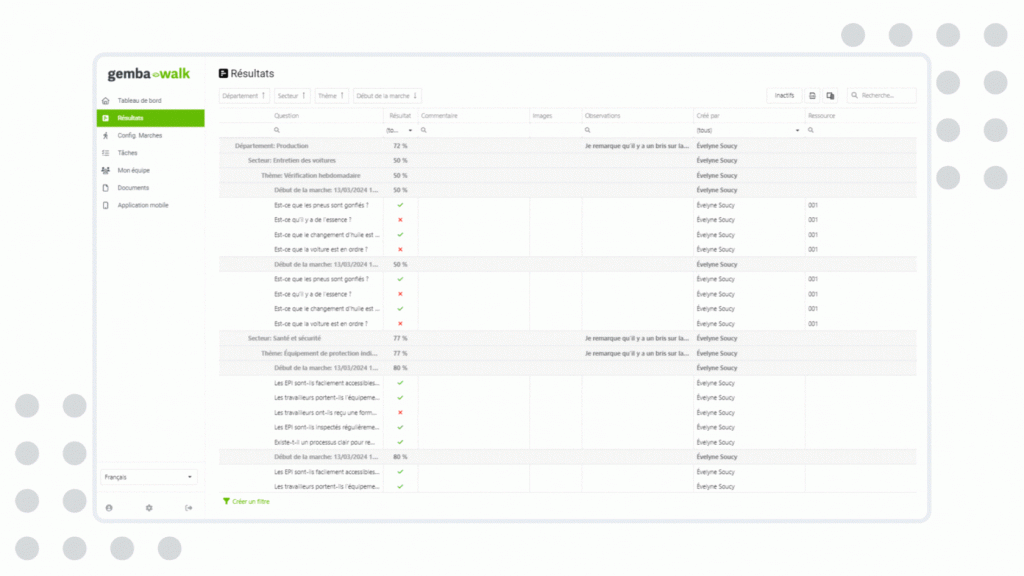
Digital documentation allows full traceability of inspections and corrective actions. Detailed reports and data histories help maintain high quality standards. By quickly identifying deviations and following corrective measures, you ensure consistent quality of your products and services.

Digitizing and documenting your floor tours is not just a modernization; it’s a strategic investment to optimize your business in terms of security, The European Commission has recently published a report on the European Union’s research and development programme. Adopt Gemba-Walk and turn your floor tours into a source of added value.

Ready to transform your floor tours? Contact us today to find out how Gemba-Walk can make a difference in your business!


Plan a demo

Back to blog articles

Types of questions to ask during floor tours

Gemba Walks are a powerful tool to improve processes and strengthen the culture of continuous improvement in a company. By going out into the field and asking the right questions, leaders can gain valuable insights on four key areas: health and safety, productivity, quality assurance and collaborative communications.

Here are some questions to ask during your Gemba Walks, as well as an explanation of the importance of each axis and what they can improve.

Health and safety

The health and safety of employees are top priorities. By asking questions about these aspects, you can identify and solve potential problems before they become critical. This helps to reduce workplace accidents, improve employee well-being and create a safer work environment.

Examples of questions

  • Do you always use the appropriate safety equipment?
  • Have you noticed any safety risks in your work environment?
  • Have you received adequate training on safety?
  • Are all personal protective equipment available and in good condition?

Productivity

Improving productivity is a constant goal for any business. By asking questions about productivity, you can identify inefficiencies and bottlenecks. This simplifies processes, reduces downtime and increases overall efficiency, This results in better use of resources and increased outcomes.

Examples of questions

  • Are the tools you use performing well?
  • Are there any tasks that take longer than necessary?
  • Do you have all the resources you need to complete your tasks?
  • Are current processes easy to follow?

Quality assurance

Ensuring the quality of products and services is crucial to maintaining customer satisfaction and the reputation of the company. By asking questions about quality assurance, you can identify quality issues and opportunities for improvement. This helps to ensure high standards, reduce defects and improve customer satisfaction.

Examples of questions

  • Are quality controls carried out regularly?
  • Are there any recurring quality issues that you have noticed?
  • Do you have the tools to perform quality checks?
  • Are the quality procedures clear and followed?

Communication and collaboration

Clear communication and effective collaboration are essential for the success of any organization. By exploring these areas, you can identify barriers to communication, improve coordination between teams and strengthen collaboration. This leads to better team cohesion and faster problem solving.

Examples of questions

  • Is communication between the different departments effective?
  • Do you have access to the communication tools needed for your work?
  • Do you feel listened to by your team?
  • Is important information shared in a timely manner?

Gemba Walks are a valuable opportunity to connect with employees and gain direct insights into operations. By asking targeted questions, you can identify areas for improvement and engage employees in finding solutions. These closed questions allow quick and clear answers, thus facilitating the identification of critical points.

Want to make the most of your Gemba Walks? Contact us today to find out how we can help you ask the right questions and transform your organization. Together we can create a safer, more productive and better working environment!


Plan a demo

Back to the blog posts

How to make floor tours a habit?

In manufacturing and industry, process optimization is crucial to maintain efficient and high quality production. Floor touring, or Gemba-Walk, is a powerful tool to achieve this goal.

Yet, many managers and supervisors face difficulties integrating this practice on a regular basis. Without consistent adoption, it is difficult to gather the data needed to generate effective action plans and see a tangible return on investment. So how do you turn floor touring into a habit that is rooted in your company’s culture? Here are some tips to get there.

Understand the importance of floor tours

For a habit to take root, it is essential that the entire team understands its value. Floor tours allow not only to quickly detect problems, but also to understand processes in real time and identify opportunities for continuous improvement. They also promote open communication between production teams and managers, creating a collaborative and transparent work environment.

Start with clear communication and proper training

Before starting the floor tours, it is crucial to inform and train your team. Explain the objectives of the Gemba-Walks, how they will be conducted, and the expected benefits. For example, when introducing Gemba-Walk in an auto parts manufacturing plant, supervisors took the time to show how identifying a quality problem on the production line led to a quick and efficient solution, thus improving the satisfaction of the end customer.

Integrating floor tours into the daily routine

For floor tours to become a habit, they must be an integral part of the daily routine. Start by planning specific slots for these visits. For example, you can decide that every morning, from 9am to 10am, supervisors will do their floor tour. Establishing a fixed schedule reinforces the importance of this activity and helps employees prepare mentally and physically.

Use appropriate tools to simplify the process

The use of dedicated software, such as Gemba-Walk, can greatly facilitate the integration of floor tours. Our application, designed to be user-friendly and customizable, allows managers to plan, track and analyze routes effectively. By automating certain administrative tasks and providing real-time reports, Gemba-Walk helps teams focus on the essentials: observation and continuous improvement.

Encourage active participation and feedback

Floor tours should be a participatory activity. Encourage your employees to get actively involved by asking questions and sharing feedback. For example, in a company producing electronic products, operators were encouraged to report small malfunctions of their machines during the Gemba-Walks, which allowed for more effective preventive maintenance. The more feedback you receive regularly, the more you can adjust and improve your processes.

Floor tours, when well integrated, can transform the way your business operates, fostering continuous improvement and open communication. By following these tips and using tools like Gemba-Walk, you can make floor touring a beneficial and lasting habit.

Ready to transform your business with regular Gemba-Walks? Discover how our software can help you simplify and optimize your floor runs. Contact us for a free demo today!


Schedule a demo

Back to the blog posts

Overcoming resistance: Integrating Gemba-Walk into a company

In an ever-changing world, companies must adapt quickly to remain competitive. Integrating a Gemba-Walk application can be a powerful way to improve business processes and foster a culture of continuous improvement.

However, this transition can sometimes encounter resistance within the team.  In this article, we explore the essential steps to successfully integrate a Gemba-Walk application into business while overcoming resistance to change.

Understand the benefits of the Gemba-Walk app

The Gemba-Walk app offers several concrete benefits for businesses of all sizes. First, it enables efficient process optimization by providing real-time visibility into field operations, making it easier to identify inefficiencies and opportunities for improvement. In addition, by reducing waste and improving quality, it directly contributes to increased operational efficiency and customer satisfaction.

For employees, the app dramatically simplifies follow-up tasks by automating tedious manual processes, freeing up time to focus on tasks with higher added value. In addition, it offers employees the unique opportunity to actively contribute to process improvement by allowing feedback and suggestions directly from the field.

Moreover, our Gemba-Walk application is distinguished by its fully customizable character and its user-friendly interface, guaranteeing a smooth integration and a minimal learning curve for users, This is a significant advantage for companies that want to maximize their return on investment.

The essential steps to integration

1. Communicate change effectively

When integrating a Gemba-Walk application into an enterprise, effective communication about change plays a crucial role in the success of the process. It is essential to involve stakeholders from the beginning and provide them with a clear understanding of the objectives and benefits of the application.

By explaining in detail how the app can improve the day-to-day lives of employees and contribute to the overall success of the company, leaders can generate stronger engagement and support from the team.

Concrete examples to share with your team:

Resolve existing issues

“With the introduction of our new Gemba-Walk application, we will be able to quickly identify and solve quality problems in our production process. This will allow us to reduce waste and improve our overall efficiency. ‘

Increase operational efficiency

“By visualizing our processes in real time, we can reduce unplanned downtime, optimize our workflows for increased productivity, and our field teams now have real-time information to make informed decisions. This will allow us to reduce delays in our operations and improve customer satisfaction.”

2. Train and prepare the team

The goal of the Gemba-Walk app is to simplify and improve your existing processes, without adding additional workloads to your schedule. By preparing your teams for training, it will facilitate the integration of the application into their daily work, allowing you to increase your operational efficiency and more effectively solve the challenges encountered.

To ensure a smooth integration of the Gemba-Walk application within your team, offer comprehensive training focused on the ease of use and essential features of the tool. Organize demonstration sessions and hands-on workshops to familiarize employees with the app and ask questions.

Did you know that…

We understand that every company has different training needs, so we offer personalized support.

Online or in-person meetings are available to provide additional support if needed. In addition, to facilitate integration, we have developed short and targeted training capsules, allowing users to train at their own pace.

For those who prefer a more structured approach, we also offer a complete support package, where we plan and implement the training process from A to Z, ensuring your team is perfectly prepared to get the most out of the Gemba-Walk app.


Schedule a meeting to learn more about coaching

3. Creating an enabling environment for change

Foster a climate of trust and openness where every employee feels comfortable expressing themselves. Encourage your employees to share their ideas, questions and even concerns about the Gemba-Walk app, so you can meet their needs and ensure an optimal user experience for all.

By working together in a spirit of collaboration and trust, we are confident that you will overcome the challenges of change and achieve your common goals successfully.

4. Manage resistance to change

Effective management of resistance to change is crucial for the successful integration of the Gemba-Walk application into business. To do this, it is essential to identify potential sources of resistance within the team and proactively address them. This may involve providing additional information about the benefits and operation of the app, as well as offering personalized support to address individual concerns.

In addition, by involving opinion leaders and enthusiastic employees, it is possible to actively promote the application and address the concerns of skeptics. By fostering a culture of mutual support, we are better equipped to overcome obstacles and foster a smooth transition to using the Gemba-Walk app in your business.


Schedule my demonstration now!

Back to blog posts.

After the Gemba-Walk: Put your observations into action to boost your operations!

After surveying the corners of your business, closely scrutinizing each operation during multiple floor tours and gathering a mountain of data, comes the crucial step: take action! Because for us, floor tours are not only pleasant walks, they are the starting point to find challenges, seize opportunities and trigger change. So, what to do once you have walked the aisles of your company several times?

Here is our guide to turning your observations into concrete actions that will propel operational excellence!

1. Dissecting Data: Understanding Trends and Problems 🧐

After your floor runs, dive into the data collected. Review each observation, each note carefully. Identify emerging trends, patterns and sticking points. This analysis will serve as a basis for setting your priorities and designing effective solutions.

2. Focus your efforts: Prioritize issues 🆙

Not all problems are the same. Prioritize them based on their impact on your operations. Focus on areas where improvements will have the greatest impact. This will allow you to optimize the effectiveness of your actions and manage your resources wisely.

3. Create Together: Engage your team in problem solving 🙋🏽‍♀️🙋🏽‍♂️

Problem-solving is a team effort! Involve everyone in the process. Organize brainstorming sessions to bring out the most creative ideas. Make sure the proposed solutions are practical, feasible and aligned with your goals. The diversity of viewpoints can be a source of innovation!

4. Accurately Plan: Implement Solutions 🔑

Once solutions are defined, develop a detailed action plan to implement them. Set clear goals, realistic deadlines and define responsibilities. Ensure that each team member understands their role and contribution to collective success.

5. Communicating and Encouraging: Creating a Collaborative Environment 🤝

Communication is the key to maintaining the momentum of continuous improvement. Openly share the results of your floor tours with the entire team. Promote exchanges of ideas and feedback. Make sure everyone feels involved and involved in the change process.

6. Evaluate and adjust: Be agile to results 🎯

Your work is not finished once the actions are implemented. Regularly monitor progress and evaluate the effectiveness of implemented solutions. Be prepared to adjust your approach if necessary based on the results obtained. Continuous improvement is a journey, not a destination!

7. Embed in Corporate Culture: Making Floor Tours a Habit ☕

Finally, integrate floor tours into the daily life of your company. Encourage all team members to actively participate and maintain a constant commitment to continuous improvement. Floor tours should not be an isolated event, but a natural part of your corporate culture.


In conclusion, floor tours are a powerful tool to identify opportunities for improvement and drive change within your business. By following these steps after your tours, you will turn your observations into concrete actions that will propel your company towards operational excellence! So, ready to take action? If you want to find out how our Gemba-Walk app can help you optimize your operations and implement these recommendations effectively, feel free to schedule a demo with one of our representatives today!

Schedule a demo


Back to the blog posts

How can Gemba walks help identify and address waste in processes?

Are you looking for a way to identify and address waste in your processes? Look no further than Gemba walks. These walks are an effective tool that can help you pinpoint areas of waste and optimize your processes for maximum efficiency. By getting out of the office and onto the shop floor, you can observe firsthand where inefficiencies lie and take immediate action to address them. In this article, we explain how you can meet your business goals thanks to Gemba walks. 

Key Takeaways

  • Gemba walks allow for direct observation of activities, interactions, and processes, leading to the identification of various types of waste.
  • Gemba walks create an open channel for communication and collaboration, allowing employees to express their ideas and concerns about inefficiencies.
  • Waste identified during Gemba walks can be quickly addressed through immediate action, leading to process optimization and improved operational efficiency.
  • Gemba walks promote a culture of continuous improvement and involve employees at all levels in contributing to lean manufacturing principles.

The Importance of Gemba Walks in Waste Identification

Gemba, meaning “the actual place” in Japanese, refers to the practice of going to the workplace to observe and understand how work is done. By physically being present on the shop floor or in the office, you can directly observe the activities, interactions, and processes taking place.

During a Gemba walk, you have the opportunity to engage with employees and workers at all levels. By talking to them and observing their work firsthand, you can gain valuable insights into potential sources of waste. Employees are often keenly aware of inefficiencies or bottlenecks but may not always have an outlet for expressing their ideas or concerns. Through Gemba walks, you create an open channel for communication and collaboration.

By actively observing the work environment during a Gemba walk, you can identify various types of waste such as overproduction, defects, waiting time, unnecessary motion, or transportation. These observations allow you to pinpoint areas where improvements can be made. Additionally, by involving employees in this process, they feel empowered to share their knowledge and contribute towards finding solutions.

Gemba walks provide opportunities for improvement by highlighting areas where changes can be made to eliminate waste. By equipping yourself with tools like value stream mapping or 5S methodology during these walks, you can further analyze processes and devise effective strategies for waste reduction.

Invest in a Gemba walk app

Key Benefits of Gemba Walks in Process Optimization

One of the key benefits of conducting Gemba walks is that they can quickly highlight areas where processes can be optimized. By physically observing the work environment and engaging with employees, Gemba walks provide valuable insight into day-to-day operations. 

Here are three ways Gemba walks contribute to process optimization:

  • Waste Identification: Gemba walks allow you to identify various types of waste, such as overproduction, defects, waiting time, excess inventory, unnecessary motion, and transportation. By actively seeking out these wasteful activities, you can take immediate action to eliminate or reduce them.
  • Continuous Improvement: Gemba walks promote a culture of continuous improvement by encouraging employees to suggest potential improvements based on their firsthand experiences. This collaborative approach fosters innovation and empowers individuals at all levels to contribute towards lean manufacturing principles.
  • Operational Efficiency: Through Gemba walks, you gain a deep understanding of how processes flow and interact within the organization. This knowledge enables you to identify bottlenecks, streamline workflows, and implement changes that improve operational efficiency.

Common Types of Waste Uncovered During Gemba Walks

There are various improvement opportunities on any shop or production floor. One of the main areas that can be improved is waste reduction. 

Transportation Waste

Gemba walks are a critical practice in lean management that involves leaders going to the workplace (Gemba) to observe processes and uncover various types of waste, including transportation waste. During these walks, leaders and people directly involved in the task are encouraged to engage in open discussions and use a checklist that emphasizes safety, quality, and procedure adherence.

By closely examining how materials or products move within the process, leaders can identify unnecessary movements and transportation, ensuring that resources are used efficiently and aligned with customer demands. This proactive approach empowers employees to contribute to waste reduction, ultimately improving overall quality and operational effectiveness.

Inventory Waste

Gemba walks play a crucial role in identifying inventory waste as a key component of ongoing process improvement. When management teams engage in Gemba walks, they gain a deeper understanding of processes and operations through direct observation and interaction with employees performing regular tasks. The ultimate goal is to foster a more thorough comprehension of task management and inventory levels. 

By closely examining how materials are stocked and managed on the shop floor, leaders can pinpoint excess inventory, ineffective storage practices, and areas where materials are underutilized. This hands-on approach empowers teams to make informed decisions to optimize inventory levels, reduce costs, and enhance overall operational efficiency.

Employee Potential Waste

Gemba walks serve as an invaluable tool in uncovering employee potential waste within an organization’s continuous improvement platform. By engaging in direct observation and regular interaction with fellow employees, Gemba walkers gain valuable insight into individual employee performance and input. This genuine desire to understand day-to-day operations provides real opportunities for employee evaluation and recognition of their untapped potential. 

Gemba walks become an integral part of the improvement cycle, fostering a culture where employee contributions are not just encouraged but actively sought out. This approach leads to enhanced operational performance and ensures that the full spectrum of employee capabilities is leveraged for continuous improvement.

Strategies for Conducting Effective Gemba Walks

Effective Gemba walks are a great lean manufacturing technique to improve processes in the manufacturing industry. Here are tips for conducting them:

  • Develop a Solid Understanding: Begin by gaining a solid understanding of the process or area you intend to observe. Study current practices, standard procedures, and quality management systems.
  • Set an Achievable Goal: Define a clear and achievable goal for the Gemba walk, such as improving efficiency, safety, or quality.
  • Engage Directly with Frontline Workers: Start by engaging in a dialogue with workers on the shop floor. Encourage open and respectful communication to gain their trust and insights.
  • Observe and Collect Data: Walk through the process, observing each step closely. Use digital check lists or a Gemba walk app to record your observations.
  • Focus on Value-Creating Work: Concentrate on identifying value-creating work and areas where overburdened people or wasteful activities exist.
  • Ensure Safety: Look out for any imminent safety hazards and address them immediately. Safety is a top priority.
  • Respect for People: Show respect for frontline workers and their knowledge. Acknowledge their contributions and suggestions.
  • Feedback to Management: Provide feedback to upper management based on your observations. Discuss any complex issues and propose solutions.
  • Regular Practice: Make Gemba walks a regular practice, not a one-time event. Schedule them periodically to monitor progress and sustain improvements. 

Are there any specific tools or techniques that can be used during a Gemba walk?

Overcoming Challenges in Waste Identification Through Gemba Walks

To overcome challenges in waste identification during Gemba walks, you can actively involve frontline employees and encourage them to share their insights and suggestions for improvement. By creating an environment that values their input, you can harness their knowledge and experience to identify waste more effectively. 

Here are some strategies to address these challenges:

  • Foster open communication: Encourage employees to voice their observations and concerns regarding waste in processes. Actively listen to their feedback and create a safe space for them to speak up without fear of repercussions.
  • Provide training on lean management tools: Equip your employees with the necessary skills and knowledge to identify waste using lean management tools such as value stream mapping or 5S. This will empower them to actively participate in the waste identification process.
  • Conduct regular Gemba walks: Schedule regular Gemba walks with frontline employees to gain a deeper understanding of the processes firsthand. This will allow you to observe potential sources of waste and engage in real-time problem-solving discussions.
  • Implement a feedback loop: Establish a system where employees can provide continuous feedback on identified areas of waste. This will ensure that improvements are implemented promptly, fostering a culture of continuous improvement efforts.

Invest in a Gemba Walk App

If you are looking for a way to improve the efficiency of your Gemba walks, the Gemba walk app is the ultimate solution. Our app streamlines the Gemba walk process, allowing for real-time data capture and analysis. This enhances efficiency by eliminating the need for paper-based checklists and manual data entry.

The app also promotes better communication and collaboration among team members, as findings can be instantly shared with relevant stakeholders. Furthermore, it facilitates data-driven decision-making by providing comprehensive insights into process performance, making it the ideal solution for all Gemba walkers. 

Book a demo 

Frequently Asked Questions

Gemba walks are crucial for understanding the reality of operations, identifying waste, engaging with employees, and fostering a culture of continuous improvement.

Gemba walks are usually conducted by managers, supervisors, or lean facilitators, but they can involve anyone interested in improving processes.

The main goals are to identify and eliminate waste, improve process efficiency, enhance product or service quality, and engage employees in problem-solving.

SEO GLOSSARY

Gemba, waste, employee, gemba walk, observations, people, goal, workers, steps, improvements, gemba walks, customer, leaders, checklist, issues, opportunities for improvement, tools, understanding.

Task, solutions, efficiencies, manufacturing, safety, practice, communication, valuable insight, continuous improvement, feedback, quality, production, procedure, list, shop floor, process improvement.

Employee engagement, lean manufacturing, improvement opportunities, potential improvements, production floors, decisions, continuous improvement efforts, continuous improvement process, ideas for improvement.

Improvement plan, employee morale, collaboration between employees, deep understanding, deeper understanding, company goals, primary goal, business leaders, team leaders, crucial step, key steps.

Operational efficiency, cost efficiency, regular basis, actual work process, active communication, effective solution, informed decisions, Genchi Genbutsu, key component, ongoing process, management team.

Wasteful activity, continuous improvement initiatives, suggestions for improvement, continuous improvement platform, employee evaluation, employee input, employee performance evaluation, fellow employees.

Individual employee, gemba walkers, invaluable tool, lean management tools, essential tool, lean tool, manufacturing process, understanding of processes, understanding of operations, ultimate goal.

Customer satisfaction, insight into customer needs, customer expectations, customer service, valuable feedback, constructive feedback, personal observation, record observations, process steps.

Process efficiency, daily tasks, regular tasks, task management, potential safety hazards, safety hazards, production process, daily basis, day basis, basis, safer work environment, potential waste.

Sources of waste, checklist template, potential issues, quality products, potential solutions, standard operating procedures, list of questions, first-hand look, genuine desire, Japanese language, key performance indicators, common process, established process.

Are there specific tools or techniques that can be used during a Gemba walk?

Gemba, a Japanese term meaning “the actual place,” refers to the location where value is created. Gemba walks involve going to the workplace to observe firsthand how work is done and interact with employees. It allows managers and leaders to gain insights into the work environment and identify areas for improvement.

While the Gemba walk itself is a valuable technique for continuous improvement, there are specific tools and techniques that can be used to enhance its effectiveness even further. These tools and techniques can help to systematically analyze processes, gather data, and foster a culture of problem-solving and continuous improvement. In this article, wel explore some of the tools and techniques that can be used during a Gemba walk to make it a more impactful experience.

Key Takeaways

  • Regular Gemba walks facilitate prompt corrective action and contribute to a safer, more cost-efficient workspace.
  • Empowering frontline employees through involvement in the improvement process, such as utilizing the 5 whys is a key benefit.
  • Mapping is a great way to get a broad outlook of your processes, whether it be value stream mapping or process mapping. 
  • A Gemba walk app is a 21st century digital tool to make Gemba walks more efficient.

Why Are Gemba Walks Important?

Gemba walks are crucial in lean management philosophy as they provide an effective means to engage with the actual work process at the frontline. They allow team leaders and managers to identify safety concerns, inefficiencies, and opportunities for cost-saving in real time. 

By regularly conducting these walks, organizations can take corrective action promptly, ensuring a safer and more cost-efficient workspace. Gemba walks also empower frontline employees by involving them in the improvement process, making them feel valued and motivated to contribute to future improvement efforts.

In lean management, Gemba walks are the most efficient method to gain a firsthand understanding of the entire process. These regular walks through the workspace ensure that workspace efficiency is continuously optimized. They underscore the importance of direct observation and interaction with employees on the frontlines, making Gemba walks an indispensable tool for any organization committed to the principles of lean management.

Best Gemba Walk Tools And Techniques

In this section, we shed light on effective tools and popular management techniques that empower organizations to maximize their continuous improvement efforts. Discover how these resources can elevate your Gemba Walk experience and drive operational excellence.

1. Gemba Walk App

A Gemba Walk app is an invaluable tool for enhancing the effectiveness of Gemba walks in the context of lean manufacturing and continuous improvement. It simplifies the process by making it easier to record observations and automatically generates detailed reports. With predefined lists of questions, it ensures a comprehensive assessment of the entire production floor. Moreover, it encourages employee input, fostering a culture of collaboration. The app’s automated reporting simplifies follow-up questions and facilitates data-driven decision-making for the leadership team, making it an indispensable asset for continuous improvement efforts.

Discover key features

2. The 5 Whys Technique

The 5 Whys technique helps identify the root cause of a problem during a Gemba walk. During the Gemba walk, you can engage with employees and ask them a series of “why” questions to get to the underlying cause of a problem. By asking why multiple times, you can uncover valuable insights and dig deeper into the issue at hand.

As a management tool for continuous improvement, the 5 Whys technique is a powerful tool to identify opportunities for improvement. By asking why a problem occurred, you can uncover the underlying factors that contribute to the issue. This helps you to find solutions that address the root cause, rather than just treating the symptoms.

Questions asked during a Gemba walk 

3. Process Mapping

When conducting a Gemba walk with your team, process mapping can be a valuable tool to identify areas for improvement. By mapping out the current process, you can identify bottlenecks, redundancies, and opportunities for streamlining. This visual representation helps everyone on the team understand the process and identify areas where changes can be made to improve efficiency and customer satisfaction.

Process mapping can also be a useful method for developing an action plan. By mapping out the current process and then brainstorming potential improvements, you can identify specific actions that need to be taken to optimize the workflow. This method allows for a systematic approach to process improvement, ensuring that changes are based on data and analysis rather than guesswork.

4. Value Stream Mapping

Value stream mapping is a useful tool for identifying areas of waste and inefficiency in a workflow. It is commonly used during Gemba walks on factory floors to analyze and improve the overall performance of a process. By visually mapping out the entire value stream, from the initial customer request to the final product delivery, value stream mapping provides a comprehensive view of the current state of operations. 

During a Gemba walk, you can use a checklist specifically designed for value stream mapping to guide your observations and analysis. This checklist helps you identify improvement opportunities and gather the necessary data to create a value stream map. It prompts you to observe the actual work processes, gather information on cycle times, lead times, and inventory levels, and assess the overall flow of materials and information.

What are the key steps involved in Gemba walks?

5. Standardized Work

During a Gemba walk, it’s important to document the standardized work procedures and identify any variations or deviations from the established standards. This ensures that the processes are being followed consistently and allows for the identification of potential improvement opportunities. There are several tools and techniques that can be used during a Gemba walk to assess standardized work and drive continuous improvement initiatives.

By engaging with the employees performing the work with direct questioning, the observer can gain valuable insights into their understanding and execution of standardized work. This allows for a more comprehensive performance review and helps to identify any gaps or areas for improvement.

How does a Gemba walk contribute to process improvement?

6. Visual Management Tools

Visual management tools provide a visual representation of the manufacturing process, allowing you to see the flow of the work and the status of each task in real time on a daily basis. This allows you to identify any areas where the flow is interrupted or where there is a backlog of work, enabling you to take action to address these issues and keep the stream of work flowing smoothly.

On the shop floor, visual management tools can be used to create visual cues that guide employees in their routines. These cues can be in the form of visual displays, charts, or boards that provide clear instructions and reminders of important tasks. By using visual management tools in this way, you can improve employee engagement and ensure that everyone is following the same standardized processes.

7. Gemba Walk Checklists

As you conduct a Gemba walk, make sure to utilize checklists to ensure you cover all the necessary areas and tasks. Checklists serve as specific tools that can enhance the effectiveness of your Gemba walks. By using a comprehensive checklist, you can ensure that you ask key questions and cover all relevant areas during your walk.

A Gemba walk checklist should include a list of key questions that address different aspects of the Gemba, such as safety, quality, and productivity. For example, you may include questions like “Are all safety protocols being followed?” or “Is the work area organized and free from unnecessary clutter?” By having these questions on your checklist, you can systematically evaluate each area and identify potential issues or improvement opportunities.

Invest In The Gemba Walk App 

If you want a tried and tested way to improve your Gemba walks, the Gemba Walk App is the ultimate solution. Designed to seamlessly fit into your daily routine, our app is a 21st-century digital approach to Gemba walks. With everything you need to record your walks within the app, you can easily store all your insights in one place. Our innovative app even generates personalized reports in order to make it easier to implement improvements over time. 

Contact us

Frequently Asked Questions

Why are Gemba Walks important in Lean Manufacturing?

Gemba Walks are crucial in lean manufacturing because they enable the identification of inefficiencies, waste, and opportunities for improvement by directly observing operations on the shop floor.

Who should participate in Gemba Walks?

Gemba Walks typically involve senior leaders, managers, and sometimes cross-functional teams. Anyone interested in understanding and improving the work process can participate.

How often should Gemba Walks be conducted?

The frequency of Gemba Walks can vary but they are often conducted regularly, such as weekly or monthly, to ensure ongoing improvement and engagement with frontline employees.

SEO GLOSSARY (see below)

Gemba, process, employees, times, questions, improvements, Gemba Walk, team, solutions, insight, management, customers, Gemba Walks, goals, opportunities for improvement.

Valuable insights, element, factory floors, safety, performances, industries, stream, staff, floor, shop floor, efficiency, action plan, method, continuous improvement, plan, businesses, routines, lean manufacturing.

Gemba walk checklist, daily basis, Japanese term, terms, role, effective tools, continuous improvement tool, improvement opportunities, manufacturing process, actual work process, list of questions.

Open-ended questions, employee engagement, employee input, popular management technique, safety concerns, cost efficiency, manufacturing industry, daily routine, audits, software engineering.

Corrective action, improvement projects, continuous improvement efforts, continuous improvement initiatives, future improvement efforts, ideas for improvement, process improvement.

Gemba walk checklists, Gemba walk, actual process, common process, entire process, follow-up questions, checklist questions, employee morale, feedback from employees, frontline employees.

Objectives with employees, broader team, leadership team, project team, team leaders, lean management, lean management philosophy, management leaders, project management software, floor managers.

Production floor, improvements over time, real time, time production, first-hand insight, questions about safety, workspace efficiency, strategic goals, potential solutions.

Digital solutions, front-line staff, customer service, customer service centers, essential elements, measurable performance indicators, industry standards, efficient method, lean method, business process.

Usual routine, layered process audits, basis, regular basis, core steps, wide variety, regular walks, digital tools, powerful tool, essential tool, lean tools, comprehensive checklist, complex project, crucial step, key step.

What Are The Key Steps Involved in Performing Gemba Walks?

Are you looking to improve efficiency and productivity in your workplace? One effective method to achieve this is by implementing Gemba walks. But what exactly are Gemba walks and how can they benefit your organization? Gemba, a Japanese term meaning “the real place,” refers to the location where value is created in a business process. Gemba walks involve leaders and managers going to the actual work area to observe and understand processes firsthand.

Performing Gemba walks is crucial for organizations aiming to identify and eliminate waste, improve efficiency, and enhance employee engagement. By directly observing the work environment, leaders can gain valuable insights and make informed decisions to drive continuous improvement. In this article, we explain the key steps involved in performing Gemba walks and how they can benefit your organization.

8 Steps to Perform Successful Gemba Walks

1. Defining the Purpose and Objectives

When performing Gemba Walks, it’s important to clearly define the purpose and objectives to ensure a focused and productive experience. A Gemba walk is a key step in the process of continuous improvement where management visits the workplace to observe operations firsthand.

By defining the purpose and objectives of the Gemba walk, you can effectively communicate what you hope to achieve during this time. Firstly, defining the purpose of the Gemba walk allows everyone involved to understand why it is being conducted. Are you looking for insights into a specific process or trying to identify opportunities for improvement? Clearly stating the purpose helps set expectations for both employees and management, ensuring that everyone is on the same page.

Next, determining the objectives of the Gemba walk provides a roadmap for what needs to be accomplished. This could involve engaging with employees, asking them questions about their work processes, or identifying potential bottlenecks or inefficiencies. Setting clear objectives ensures that your team focuses on specific areas during their observation, maximizing their time on the floor.

2. Communicating the Purpose and Objectives to the Team

To effectively engage with the team during Gemba walks, clearly communicate the purpose and objectives. This step is crucial in ensuring that everyone understands why these walks are being conducted and what is expected from them. By communicating the purpose and objectives of Gemba walks, you can create a sense of direction and focus for the team. It allows them to see how their input and observations contribute to the overall improvement plan.

When communicating the purpose and objectives to the team, it’s important to emphasize the importance of frontline employees’ involvement. Let them know that their input is valued and that their observations can lead to potential process improvements. This will encourage collaboration between employees and frontline teams, fostering a culture of continuous improvement efforts.

Furthermore, by clearly communicating the purpose and objectives, you can also boost employee morale. When employees understand that their opinions matter and that they have a role in making positive changes within the organization, it creates a sense of empowerment. This can lead to increased motivation and engagement among employees during Gemba walks.

3. Selecting the Right Time and Place for the Walk

Choose the right time and place for your Gemba walk to maximize its effectiveness and impact. Timing is crucial, as you want to ensure that employees are present and actively engaged in their work. Avoid conducting the walk during peak production times or when employees may be preoccupied with urgent tasks. Instead, choose a time when there is a lull in activity or during a shift change to capture a variety of perspectives.

Additionally, consider the location for your Gemba walk. It should be an area that is directly related to the process or problem you’re seeking to address. For example, if you’re focusing on safety improvements, conduct the walk in areas where accidents have occurred or near equipment that requires special attention. By selecting the right place, you can gather valuable insights and observations that will lead to meaningful improvements.

4. Preparing and Gathering the Necessary Tools and Resources

Effective Gemba walks require careful preparation and use of the right tools and resources to ensure success and empower employees to drive meaningful change. Before embarking on this walk, it’s crucial to spend time preparing for the activity.

This involves understanding the purpose of the walk, identifying specific areas or processes to observe, and setting clear objectives. By doing so, you can focus your attention on key areas that need improvement and guide your interactions with employees towards achieving desired outcomes.

In addition to preparing mentally, physically gathering the necessary tools and resources is essential for a successful Gemba walk. These may include a notebook or tablet to record observations, a camera for taking pictures or videos of processes, measuring instruments like tape measures or timers if needed, and any relevant documentation such as work instructions or standard operating procedures.

With the Gemba-Walk App, you can easily prepare for and document your walk. The app helps you to create an agenda based on predetermined objectives, assign tasks to team members, plan the route of the walk, take notes and photos in real-time, record observations and save them as part of a timeline view.

5. Observing and Engaging with the Workforce

Engaging with the workforce during Gemba walks allows for valuable insights and fosters a collaborative environment. As you step onto the shop floor or factory floor, you have the opportunity to observe firsthand how tasks are being performed and identify areas for improvement in terms of efficiency and performance.

By interacting with employees in their workspace, you can gain a deeper understanding of their challenges and the impact that certain processes have on their productivity. During your Gemba walk, it’s important to actively listen to the concerns and suggestions raised by the workforce.

The lean management philosophy encourages real-time problem-solving and empowers employees to contribute to process improvement. By engaging with them directly, you create an atmosphere where they feel comfortable sharing their ideas, leading to a more effective continuous improvement process.

In addition to identifying opportunities for process improvement, engaging with the workforce also helps address safety concerns. While observing their work practices, you can spot any potential hazards or unsafe behaviors that might go unnoticed otherwise. This proactive approach ensures that safety issues are addressed promptly, reducing the risk of accidents or injuries on the shop floor.

6. Asking Open-ended Questions and Encouraging Dialogue

As you explore the shop floor or factory floor, take the opportunity to ask open-ended questions and spark dialogue with your workforce, fostering a collaborative environment where their insights and ideas can thrive. Encouraging dialogue is an essential step in performing Gemba walks because it allows you to gather valuable information from the people who are directly involved in the work processes. By asking open-ended questions, such as “What challenges do you face in your daily tasks?“or “How do you think we can improve this process?“, you invite employees to share their thoughts and suggestions freely.

Engaging in dialogue during Gemba walks also helps build rapport with your workforce. As a leader, actively listening to their responses and showing genuine interest in their perspectives will make them feel valued and heard. This not only boosts morale but also encourages employees to contribute more actively to problem-solving and continuous improvement efforts. Remember, it’s important to create a safe space where individuals feel comfortable sharing their opinions without fear of judgment or retribution.

7. Documenting and Analyzing Findings

During Gemba walks, it’s important to document and analyze findings in order to visually capture the insights gained from observing and interacting with employees on the shop or factory floor. Documenting the findings allows for a record of the observations made during the gemba walk, ensuring that no valuable information is lost or forgotten.

To facilitate this process, the Gemba-Walk App has a user-friendly interface that allows for easy recording of observations, with features including issue documentation, note-taking, and capturing photos. After a Gemba Walk is completed, the analytics dashboard shows all of the data collected in an easy-to-understand format for further analysis.

Once the findings have been documented, it’s essential to analyze them in order to identify trends, patterns, and areas for improvement. This analysis helps understand issues or bottlenecks that may exist within the company process. By analyzing these insights, you can optimize processes and enhance overall productivity.

8. Identifying Areas for Improvement and Setting Action Plans

To identify areas for improvement and set action plans, you need to actively involve the employees on the shop or factory floor and collaborate with them to develop solutions that address any bottlenecks or inefficiencies. During Gemba walks, it’s crucial to engage in open conversations with the workers and listen to their insights about daily operations. By doing so, you can gain a deeper understanding of their work processes and identify areas that require improvement.

This collaborative approach ensures that employees feel valued and empowered, leading to more effective problem-solving. Once you’ve identified areas for improvement through the Gemba Walk, the next step is to set action plans. This involves analyzing the findings from your observations and discussions with employees. Look for patterns or recurring issues that hinder productivity or quality.

Based on these findings, develop specific improvement actions that target these problem areas. These action plans should be clear, measurable, attainable, relevant, and time-bound (SMART goals). Involving employees in this process helps ensure ownership of the action plans and increases commitment to implementing them.

Digitize your Gemba Walks

Have you ever struggled to remember everything you saw in your Gemba Walk? Well, struggle no more! The Gemba-Walk app is the ultimate tool to digitize and track your Gemba walks. It provides a complete history of all the walks conducted at various sites, allowing for better collaboration among stakeholders and improved strategy development.

Not only will this app help organize and track your walks with ease, but it also provides invaluable insights into trends over time. This allows businesses to be proactive in their decision-making processes by leveraging data gathered from past Gemba walks.

Schedule a demo
Who Should Participate in Gemba Walks?

In today’s fast-paced business environment, organizations are constantly seeking ways to improve efficiency, streamline processes, and enhance productivity. One powerful tool that has gained immense popularity in recent years is the Gemba Walk. Originating from the Japanese philosophy of Kaizen, the Gemba Walk involves leaders and managers going to the actual workplace, known as the “Gemba,” to observe, engage, and understand the work being done firsthand. By immersing themselves in the frontline operations, decision-makers gain valuable insights, identify bottlenecks, and foster a continuous improvement culture.

However, a pertinent question arises: Who should participate in Gemba Walks? Is it limited to executives and managers, or should it involve a wider range of individuals within an organization? In this blog post, we explore the key stakeholders who can benefit from participating in these walks and why their involvement is essential for achieving sustainable and meaningful improvements.

Understanding Gemba Walks and Lean Manufacturing

Understanding Gemba walks and lean manufacturing is important for organizations looking to improve their operational efficiency and reduce waste. Gemba walks involve managers and leaders going to the front lines of their operations to observe and engage with employees, processes, and equipment. This allows them to gain firsthand knowledge of how things are actually done and identify areas for improvement.

Lean manufacturing, on the other hand, is a systematic approach to eliminating waste and optimizing business processes. It focuses on continuously improving quality, reducing lead times, and increasing customer satisfaction. By combining Gemba walks with lean manufacturing principles, organizations can identify and eliminate waste, improve productivity, and create a culture of continuous improvement. This ultimately leads to increased efficiency, cost savings, and improved overall performance.

Who Should Participate in Gemba Walks?

Senior Managers and Supervisors

Managers and supervisors typically take on the traditional role of leading improvement efforts by being physically present on the production floor. As company leaders, they conduct Gemba walks to observe how employees work and identify issues that affect productivity. During these walks, managers and supervisors ask relevant questions, listen to feedback, and gain insights into how they can improve processes. Gemba walks are essential for leaders because they allow them to see firsthand what is happening in their organization.

Leaders can identify areas where employees may need additional training or support to perform their jobs more effectively. They can also spot bottlenecks in the production process that slow down progress and find ways to eliminate them. During a Gemba walk, leaders should not only focus on identifying problems but also seek out improvement opportunities. To truly modernize this vital process and take it a step further, companies should consider digitizing their walks with the Gemba Walk App. This innovative tool allows you to easily record, track, and analyze your observations, providing real-time insights and helping you spot trends over time.

Digitize your Gemba walks

Employees

Imagine the excitement and sense of ownership your team will feel when they’re given the opportunity to contribute to continuous improvement efforts beyond their immediate job responsibilities. This is exactly what can happen with Gemba walks. While senior managers and supervisors have traditionally been the only ones involved in these walks, there’s value in involving a wider range of employees.

Having more people participate in Gemba walks means that there are more eyes on the shop floor looking for potential improvements. Employees who work directly with processes are often better equipped to identify inefficiencies or areas for improvement than those who don’t. By including them in Gemba walks, you can tap into their knowledge and experience to drive change.

Frontline Workers

As a leader conducting Gemba walks, it’s important to include frontline employees in the process. These are the individuals who are directly involved in the day-to-day operations and have a deep understanding of the processes, bottlenecks, and potential areas for improvement. Their perspectives can provide valuable information that may not be apparent to higher-level management. Additionally, involving frontline workers in the Gemba walk process can foster a sense of ownership and engagement among employees, as they feel that their voices are being heard and their contributions are valued.

Cross-Functional Teams

Involving cross-functional teams and collaborative problem-solving in Gemba Walks can greatly enhance their effectiveness and outcome. Their different perspectives and expertise can be brought together, allowing for a more comprehensive understanding of the challenges and opportunities present. This can lead to more effective problem-solving as diverse viewpoints and ideas are shared. Collaborative problem-solving further enhances this process by encouraging team members to work together, share knowledge, and collectively develop solutions. This approach fosters innovation within the organization.

Training and Development Opportunities

Gemba walks provide several training and development opportunities for employees. Some of them include:

  • On-the-Job Training: Employees can learn from seeing actual work being performed. This is an opportunity for them to understand the company’s operations and how each team contributes to overall output. It also allows them to learn how different roles, departments, and processes interact with one another.
  • Problem-Solving Skills: Gemba walks often include identifying opportunities for improvement. Employees can be involved in the process of problem identification, analysis, and solution development. This can enhance their critical thinking and problem-solving skills.
  • Process Improvement Techniques: Gemba walks are often a part of lean and six sigma methodologies. Employees can learn these process improvement techniques firsthand, including identifying waste, streamlining processes, and improving efficiency.
  • Communication Skills: During Gemba walks, employees are often encouraged to ask questions, give feedback, and engage in discussions. This can help them develop better communication and interpersonal skills.
  • Understanding of Company Vision and Strategy: Through Gemba walks, employees can see how their daily tasks align with the company’s strategy and goals. This can help them understand the bigger picture and their role within it.
  • Cross-Training: By observing different areas of the company during a Gemba walk, employees can learn about functions and roles outside of their own department. This broadens their understanding of the business and can help in future role transitions or promotions.

How to Measure the Success of Gemba Walks

Measuring the success of Gemba walks is a process-oriented task, with emphasis on improvement, problem solving, and employee engagement. Here are some methods to do it:

  • Number of Identified Issues: By tracking the number of issues, waste, and improvement opportunities identified during a Gemba walk, you can measure how effectively the process is bringing potential problems to light.
  • Resolution Rate: It’s not enough to just identify problems; you must also track how many of those problems are resolved in a timely manner. This can provide a measure of how effectively your organization responds to and addresses issues identified during Gemba walks.
  • Cycle Time Reduction: If the main goal of your Gemba walks is to streamline processes, then measuring the reduction in cycle time before and after the walk is a good measure of success. If processes are consistently becoming more efficient after the walks, it’s a sign that they’re working.
  • Employee Engagement: Gemba Walks should promote a culture of continuous improvement process. By measuring levels of employee engagement before and after walks, you can see whether or not these walks are promoting a more engaged, proactive workforce.
  • Quality Measures: If Gemba walks are being used to reduce errors or defects, then track quality metrics like Defects per Million Opportunities (DPMO), First Time Quality (FTQ), or other relevant quality indicators.
  • Financial Impact: You can also tie financial metrics such as cost savings, cost avoidance, or revenue increases that are a direct result of improvements from the Gemba walks.
  • Consistency and Frequency: Measuring how regularly Gemba walks occur and if they are occurring as planned can help ensure the walk is a consistent part of your management process, not just a one-off event.
  • Feedback: Obtaining feedback from the employees who participate in or are affected by the Gemba walks can also be a valuable measure. Their perspective may reveal if the walk was helpful, if improvements were made, or if more training is needed to fully understand and utilize the practice.
  • Safety: If the Gemba walks are also aimed at improving safety, tracking the number of safety incidents before and after the walks can show their impact.

Digitize Your Gemba Walks

Struggling to keep up with your Gemba Walks? Enhance the way you manage and organize your walks with the Gemba Walk App. Our easy-to-use application allows for easy digitization of walk cycles, tracking points, notes, and photos. You can keep track of multiple rounds of Gemba walks while preserving data over long periods of time in one convenient platform.

With our intuitive app managing Gemba walks becomes a breeze. You will never lose important information or struggle to find relevant files again! Our software eliminates errors as well as saves time and money by streamlining processes and eliminating cumbersome paper trails that can distract from real improvement plans.

Get the Gemba Walk App today!

What Are Some Best Practices for Conducting Gemba Walks?

When it comes to improving processes and increasing efficiency, one strategy that many businesses have found success with is the Gemba walk. But, what exactly is a gemba walk and how can it be effectively implemented in your organization? In this article, we explore the concept of Gemba walks and share some of the most effective strategies for conducting them.

Understanding the Concept of Gemba Walks

Gemba walks are a concept in lean management that involves going to the place where the work is happening, also known as the “Gemba.” It is a way for managers and leaders to gain firsthand knowledge and understanding of the processes, challenges, and opportunities in their organization. By physically being present in the gemba, leaders can observe and engage with employees, ask questions, and identify areas for improvement.

This concept is important because it allows leaders to have a deeper understanding of their organization and make informed decisions based on real-time information. Gemba walks also promote a culture of continuous improvement and improve employee engagement.

Identifying Key Objectives and Goals

To effectively conduct a Gemba walk, it’s crucial to identify the main objectives and goals beforehand:

  • The first objective should be to gain a comprehensive understanding of the current situation on the factory floor. This can help you identify opportunities for improvement in terms of efficiency, workflow, and collaboration between different teams. By identifying these areas, you can work towards developing solutions that can help your organization achieve its company goals.
  • Another key objective of a Gemba walk is to promote continuous improvement within your organization. This requires actively seeking out feedback from employees about their experiences working on the factory floor. By listening closely to their concerns and suggestions, you can develop new strategies that address common pain points and improve overall performance.

Digitize your Gemba walks

How to Organize a Successful Gemba Walk

Involve All Levels of the Organization

Engaging employees at all levels of the organization is crucial for a successful Gemba walk, as it fosters collaboration and allows for diverse perspectives to be heard. This involvement should start with senior management, who can set the tone by actively participating in Gemba walks and encouraging others to do so. Leaders can also use this opportunity to reinforce their commitment to the continuous improvement culture.

When involving staff from different departments or levels, it’s important to communicate clearly what Gemba walks are about and why they matter. Employees should understand that these walks are not meant to criticize or blame anyone but rather identify areas where company processes can be improved. This approach helps reduce potential resistance while also building trust between management and staff.

During the actual walk, it’s important to involve everyone in observing workflow efficiency and identifying waste. You should encourage frontline teams to share their thoughts on how certain processes could be streamlined or made more effective.

Encourage Employee Feedback and Input

As you conduct Gemba walks, it’s important to encourage your team to share their thoughts and ideas on how to improve processes. This will create a collaborative and innovative environment that encourages continuous improvement efforts. By actively seeking employee feedback, you can identify areas of the workplace that need improvement, such as workplace safety or inefficient workflows. During Gemba walks, keep an eye out for wasteful activities and take note of potential solutions.

It’s equally important to engage with employees and build positive relationships. Encouraging open communication can help employees feel valued and invested in the company’s success. This can also lead to professional development opportunities for your team members. Rather than simply telling employees what changes need to be made, work together with them to develop solutions that will benefit everyone involved. By involving your team in problem-solving discussions, you may come up with ideas that you never would have thought of on your own.

Observe Work Processes and Identify Areas for Improvement

When you conduct Gemba walks and observe your team’s work processes, you gain a better understanding of how tasks are completed and identify areas for improvement. By physically being present in the workspace, you can visualize the steps taken by employees and pinpoint exactly where changes can be made to streamline workflows.

This not only helps to increase productivity but also promotes employee satisfaction as workers feel heard and valued. As part of fostering a culture of continuous improvement, lean manufacturing principles emphasize the importance of observing work processes in order to identify waste and improve efficiency.

By regularly conducting Gemba walks, you can stay up-to-date on industry standards and ensure that your team is following best practices. Additionally, involving employees in this process through team collaboration encourages ownership over the work environment and leads to increased engagement.

Once areas for improvement have been identified, it’s important to create an action plan with specific goals and deadlines. This ensures that improvements are made in a timely manner and progress is tracked effectively. Continuously monitoring these improvements allows for ongoing evaluation of their effectiveness.

Analyze Data and Metrics to Drive Decision Making

The key to continuous improvement is analyzing data and metrics to drive decision making. By gathering and analyzing data, you can identify trends and patterns that indicate improvement opportunities. During your Gemba walks, you’ve likely collected a wealth of information about how work is done on the floor.  This information can be used in conjunction with other data points such as quality metrics, delivery rates, or cycle times.

By looking at this data, you can gain a better understanding of where improvements can be made. Senior managers play an important role in this process because they’re able to provide context and insight into why certain metrics may be trending in a particular direction. Collaboration between departments is also critical since many issues require input from multiple perspectives before effective solutions can be implemented.

Implement Action Plans and Track Progress

To ensure continuous improvement, it’s crucial to implement action plans and track progress towards achieving goals on the shop floor. Gemba walks offer valuable insight into the daily operations of various industries. By taking these walks, you can identify areas for improvement and determine which actions need to be taken.

When implementing action plans, it’s important to make them specific, measurable, achievable, relevant, and time-bound (SMART). This will help ensure that they’re effective in driving progress towards your goals. Additionally, tracking progress allows you to see how your actions are affecting performance over time. This helps you identify whether you need to adjust your approach or continue with the same plan.

During Gemba walks, there are key questions that should be asked to gain a better understanding of how processes are working. For example: What activities are being performed? Who’s performing them? How long does each activity take? Are there any bottlenecks in the process? These questions help reveal opportunities for improvement so that action plans can be developed accordingly.

Invest in The Gemba Walk App

Do you want to increase employee engagement? The Gemba Walk App is the perfect tool for C-level executives and managers. With our app, you can walk through the workspace of your organization and identify opportunities to improve efficiency, communication, morale and more. Our intuitive features will help you understand how your employees are feeling about their job and how their experience can be improved.

By investing in the Gemba Walk App, you’ll get access to real-time data on employee performance reports, survey feedback analysis dashboards and task tracking progress reports so that decisions can be made quickly and effectively.

Sign up now